

✦
Where Artistry Begins
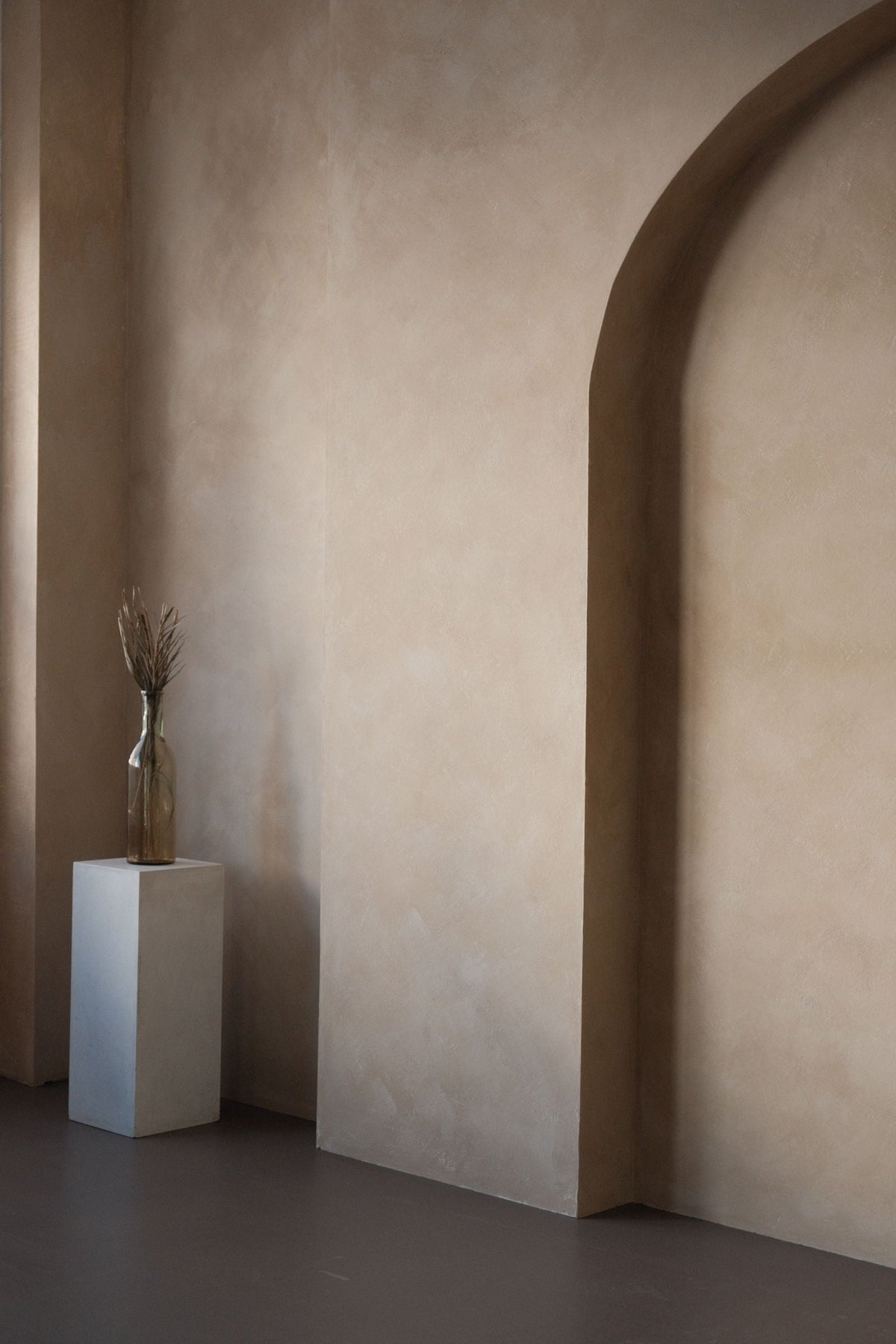
Polished plaster is a good choice for hallways and staircases when it is sealed or waxed and chosen with everyday knocks in mind, because a hard, burnished lime surface resists marks and small scuffs can usually be touched in. Zavoré installs polished plaster in hallways and tall stairwells across the UK with artisans who work for us, planning safe access and unbroken coats before any work begins.
The finish itself is explained on our polished plaster page, and Venetian plastering across the UK shows where we install. A hall is the first wall anyone sees and the one that takes the most wear, so it deserves its own plan.
Lime based polished plaster cures hard, and the final burnishing closes the surface so it feels almost like stone under the hand. That makes it far tougher than emulsion against the brush of coats, bags and shoulders. It is still a decorative finish rather than a cladding, though, so a sharp knock from a bicycle pedal or a suitcase corner can mark it.
The good news is that marks on lime plaster are often local. A light scuff can usually be buffed, and a small chip can be filled and polished in by someone who knows the material. That is very different from a painted wall, where a repair often means repainting the whole surface to hide the patch.
In most halls, yes. A wax or a sealer over polished plaster makes the surface easier to wipe and helps it shed fingermarks and splashes. We choose between them based on the plaster, the sheen you want and how the space is used. A hall that leads straight from a garden or a garage gets very different treatment from a quiet landing.
Lime breathes and suits solid masonry, while acrylic forms a film, so the sealing system is matched to the plaster underneath. That choice is made at the survey, once we know what the walls are built from.
A stairwell is often the tallest wall in a house, running from the hall floor past one or two landings. Safe access is the first thing we plan. Towers or staging are agreed at the survey, set up so every part of the wall can be reached, and arranged so the stairs can still be used where possible.
The bigger challenge is continuity. Polished plaster is laid in thin coats, and a stairwell has to look like one sheet of colour from top to bottom. We plan the work in blocks of days so the same artisans stay on the job and lay each coat across the whole height before moving on. Breaking a coat halfway up a wall is how visible lines appear, so the sequence is set before work starts.
A full high gloss polished plaster looks wonderful in a formal entrance hall, especially in a pale stone colour that bounces light down the stairs. In a busy family hall, a slightly softer sheen or a marmorino with gentle movement can be kinder to everyday wear. Venetian plaster gives a marble look but is not marble, and it brings real depth to a narrow hall.
Below the dado, some people use a tougher sealed finish, or a contrasting colour, and keep the polished face above. Others run one finish from floor to ceiling for a calm, continuous look. Both work, and we talk through the options with the sample board in your hall, morning and evening.
Most problems start behind the finish. Hallways in older houses often have patched plaster, old cracks over door heads and uneven walls where services have been chased in. Plasterboard joints need reinforcing and the right primer, and any wall that is damp has to be dried out first. Polished finishes show every dip, and a long hall wall with a ceiling light above shows them more than most.
Light switches, sockets, radiators and banisters also need thinking about. Fittings are usually loosened or removed so the plaster can run neatly behind them, and the stair string and handrail are protected. Lime is caustic while wet, so stair treads and floors are covered before work begins.
Send photos of the hall, landings and stairwell with rough heights and widths, and we talk them over with you. A survey follows, then the price, then a sample tinted to one of our 48 house colours or any NCS reference. Dates are agreed once the sample and price are signed off. The details are on our Venetian plaster installation page.
In a flat, many leases need the freeholder's permission for works, and shared stairwells usually belong to the building rather than to you, so check before planning anything outside your own front door.
A hard knock can mark any wall finish. Sealed polished plaster resists everyday brushing well, and small marks can often be buffed or filled and polished in locally. In a hall used for bikes and prams, a softer sheen hides wear better.
Yes. Curved walls are trowelled and polished by hand, following the shape. They take longer than flat walls, and the curve must be smooth and true before the decorative coats, which we confirm at the survey.
It helps to clear furniture, pictures and mirrors. We protect floors, treads, the banister and doors. Access through the hall is planned with you, as it is often the only route through the house while we work.
Yes. Polished plaster, primers and waxes are sold in our shop, tinted to your approved sample. Decorators can also train at our in person courses in Birmingham, London and Manchester.
Ready to plan a hallway or stairwell? Call +44 7592 929191, Monday to Saturday, 9am to 6pm, or email sales@zavore.co.uk with photos, rough measurements and the address. A sample board is the quickest way to try colours where they will live.
An outline of what limewash training covers about mixing limewash and the risks of slaking lime, and how to ask Zavoré about it.
BasementsA guide to decorative finishes for London basements, covering media rooms, gyms and wine rooms, why waterproofing must come first, and wh...
CheshireAn in depth guide to seamless microcement and tadelakt bathrooms for homes across Cheshire, and how to choose between them.
CheshireA guide to polished plaster and other decorative finishes for the large modern homes of Wilmslow and Alderley Edge, and where they fit in...
CheshireChester and the Cheshire countryside are full of timber framed, Georgian and Victorian buildings. This guide explains why lime finishes s...
Greater ManchesterHow microcement floors work in kitchen extensions across Greater Manchester, from the screed underneath to underfloor heating and everyda...

Providing luxury finishes for the most prestigious addresses in the world
Venetian plaster, limewash, microcement, tadelakt, metallics, sculptural plaster and gold leaf, supplied and installed by our own team, with Venetian plaster taught at our Birmingham studio.
One list, run by the people who make the material. No noise, and nothing we would not want to read ourselves.
We email as the house has something worth saying, never daily. Unsubscribe from any email, or reply STOP to any text. We never pass your details to anyone.