

✦
Where Artistry Begins
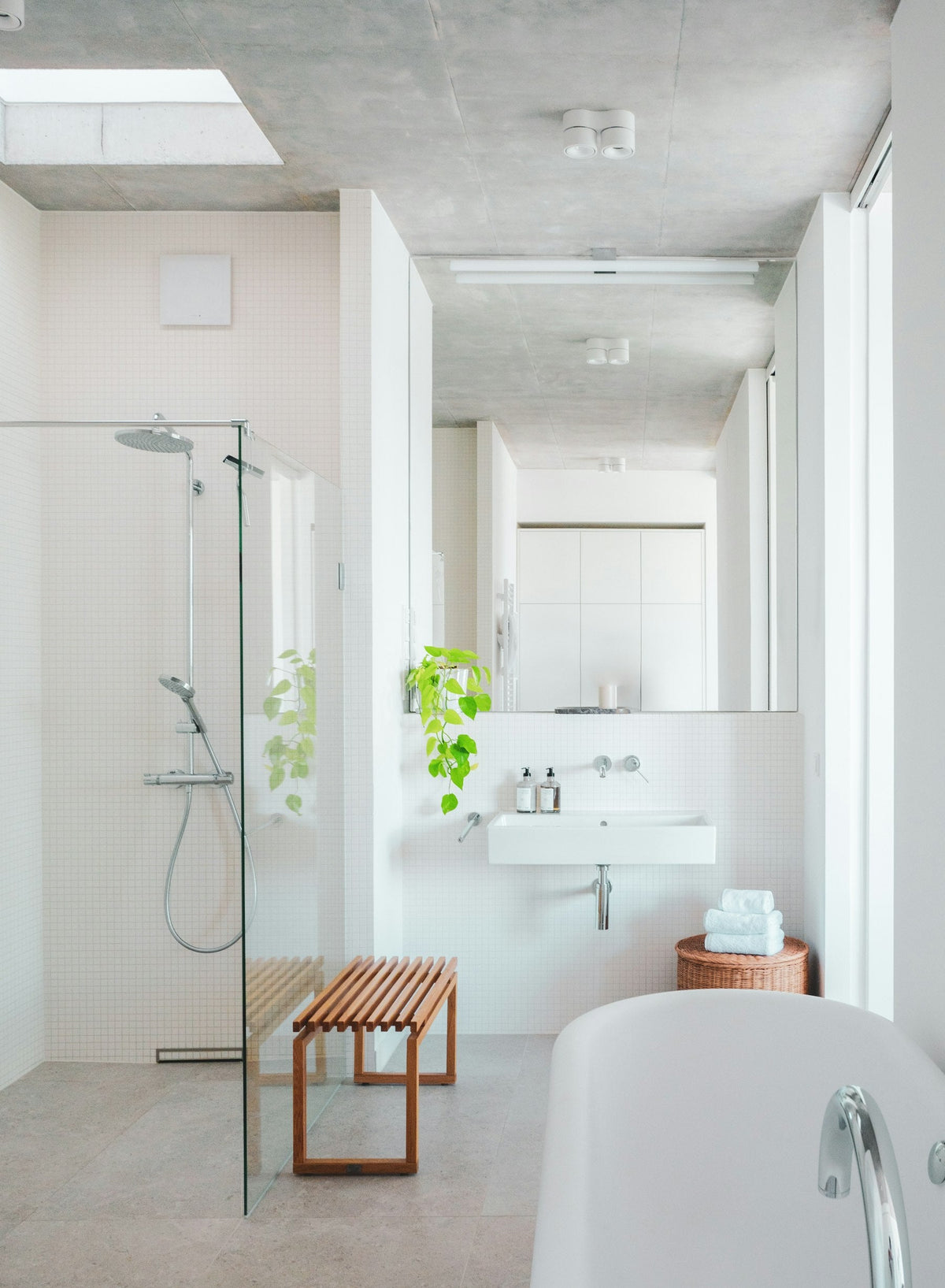
Tiles have earned their place over several thousand years, so any alternative has to argue its case. Microcement makes a strong one, and it is worth understanding exactly where each wins before you commit a floor or a bathroom to either.
Zavoré lays this for you too. Our own team provides microcement installation across the UK.
Microcement is a thin, seamless cementitious coating, typically two to three millimetres, applied by trowel over existing sound substrates: screed, tile, plasterboard, even worktops. It is not a lime plaster; it is the contemporary member of the seamless family, sealed with a two part varnish that gives it its water and wear resistance.
Seamlessness. No grout lines and no pattern repeat. A floor, a wall and even a basin can read as one continuous surface, which is the look that draws most people to it. Grout is also where tiled rooms age first: it stains, darkens and harbours mould, and microcement simply has none.
Build height and renovation. At a few millimetres, microcement can go over existing tiles without ripping out, saving demolition, waste and days of mess. It suits underfloor heating well for the same reason.
Feel. It is warmer underfoot than porcelain and slightly softer to the touch, with a matte, stone like character that suits contemporary and industrial leaning interiors.
Tiles are individually replaceable; a cracked tile is an afternoon, while a damaged microcement area needs a skilled repair that may show. Tile also carries pattern, colour and gloss in ways a monolithic surface cannot, and in relentless commercial wet areas a well specified porcelain remains the most bulletproof answer.
Microcement fails at the preparation stage or not at all. The substrate must be sound, stable and primed correctly; movement cracks must be addressed, not coated over; and the sealing coats must be applied patiently, in full, with proper curing time. Nine problems out of ten trace back to a rushed base, which is why we treat preparation as the job and the finish as the reward.
If you are weighing a specific room, tell us the substrate and the traffic and we will give you a straight recommendation, even when the answer is tile. And if you want to see the surface before deciding, sample boards in your chosen tint are the fastest way to know.
An outline of what limewash training covers about mixing limewash and the risks of slaking lime, and how to ask Zavoré about it.
BasementsA guide to decorative finishes for London basements, covering media rooms, gyms and wine rooms, why waterproofing must come first, and wh...
CheshireAn in depth guide to seamless microcement and tadelakt bathrooms for homes across Cheshire, and how to choose between them.
CheshireA guide to polished plaster and other decorative finishes for the large modern homes of Wilmslow and Alderley Edge, and where they fit in...
CheshireChester and the Cheshire countryside are full of timber framed, Georgian and Victorian buildings. This guide explains why lime finishes s...
Greater ManchesterHow microcement floors work in kitchen extensions across Greater Manchester, from the screed underneath to underfloor heating and everyda...

Providing luxury finishes for the most prestigious addresses in the world
Venetian plaster, limewash, microcement, tadelakt, metallics, sculptural plaster and gold leaf, supplied and installed by our own team, with Venetian plaster taught at our Birmingham studio.
One list, run by the people who make the material. No noise, and nothing we would not want to read ourselves.
We email as the house has something worth saying, never daily. Unsubscribe from any email, or reply STOP to any text. We never pass your details to anyone.