

✦
Where Artistry Begins
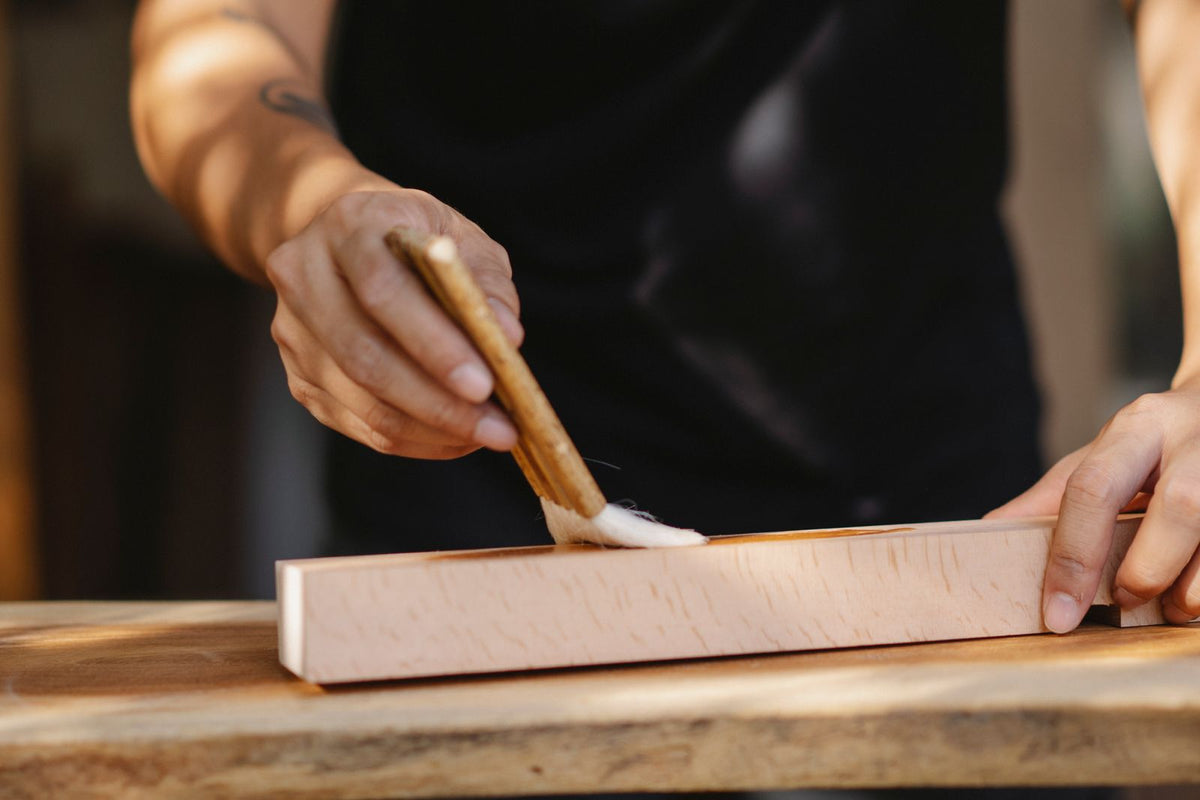
Venetian plaster wax is a thin finishing coat, usually beeswax based, that is rubbed into a cured polished plaster and buffed to deepen the colour, raise the sheen and give the surface some resistance to marks and splashes. It is one of three ways to protect a Venetian plaster. A wax protects and adds shine, a sealer forms a clear protective layer, and a waterproofer makes the surface repel water without changing how it looks. Which one you use depends on the finish and the room. This guide explains each, and how to seal Venetian plaster step by step.
People use the three words loosely, but they are different products doing different jobs.
| Wax | Sealer | Waterproofer | |
|---|---|---|---|
| Changes the look | Yes: deeper colour, more sheen | Slightly: can enhance the surface | Very little: designed to be invisible |
| Water resistance | Light | Good | Good, water beads off |
| Breathability | Stays breathable when thin | Forms a layer on the surface | Lets the surface breathe |
| Best for | Polished plaster in living spaces | Higher wear walls, concrete look and decorative finishes | Splash zones, textured and matt finishes |
| Upkeep | Rewax when the sheen dulls or water stops beading | Occasional, depending on wear | Reapply when water no longer beads |
Our Sealer (£25) is a transparent sealer for plaster, concrete and decorative finishes. Our Waterproofer (£11) is ready to use and leaves the surface able to breathe.
There is no single rule, but these are the usual pairings:
For bathrooms, where water is the main concern, our Venetian plaster bathroom guide covers which zones need what.
A natural wax is clear or near clear. It darkens and enriches the colour underneath and adds sheen without changing the hue. Our Bee’s Wax Natural (£68) is made for polished plaster, Veneziano and Pastellone and leaves a breathable layer with a subtle natural sheen. There is also a thicker Bee’s Wax Paste (£68).
A metallic wax carries metallic pigment. Rubbed over a textured or polished plaster, it catches on the raised areas and leaves the hollows in the base colour, which gives depth and a gilded or silvered edge. Bee’s Wax Metallica Gold (£68) does this in gold, with a silver version alongside it. Crea Wax (£15) is a highly pigmented metallic wax made for Stucco Crea and other decorative plasters, in gold, silver, bronze and copper.
Metallic waxes are strong. Used over a whole wall at full strength they can look heavy. Most finishes look better with the metallic wax worked thin and buffed back hard.
Work a whole wall in one session where you can, and keep the pressure consistent. Uneven waxing shows as uneven colour, because wax deepens the shade wherever it sits thicker.
Follow the product’s own instructions for coats and drying between them. As a rule, apply thinly and evenly, avoid runs and pooling, and treat whole walls rather than patches. Do not put a sealer over wax or wax over a sealer without testing on a sample board first, because they may not bond to each other.
There is no fixed interval. A feature wall in a bedroom may go years without needing it. A hallway, a kitchen wall or anywhere hands touch will need it sooner.
Two signs tell you it is time: the sheen has dulled in the areas people touch most, or water no longer beads on the surface and darkens it instead. Clean the wall gently first, then apply a thin coat and buff as before. Our guide to maintaining Venetian plaster covers cleaning and small repairs.
Not always. A polished plaster is usually waxed, because wax brings up the shine and deepens the colour. A marmorino is often left unwaxed for a matt mineral look. Anywhere that gets splashed or touched a lot needs some protection, whether wax, sealer or waterproofer, depending on the finish and how you want it to look.
Let the plaster dry through, clean off dust, then apply your chosen protection thinly and evenly. Wax is rubbed on in thin coats and buffed with a soft cloth once it hazes. A sealer or waterproofer is brushed or rolled on as its instructions say. Treat whole walls at once so the finish stays even.
Wax is rubbed into the surface and buffed, adding sheen and deepening the colour while staying breathable. A sealer forms a clear protective layer and gives stronger water resistance, with less effect on sheen. Wax suits polished plaster in living spaces; a sealer suits harder wearing walls and concrete look or textured finishes that are hard to buff.
Yes. A metallic wax rubbed over polished or textured plaster sits on the raised areas and leaves the hollows in the base colour, which gives depth and a gilded or silvered edge. Apply it thinly and buff it back hard, and try it on a sample board first, because a heavy coat can look flat.
Where to go next: find every wax, sealer and waterproofer in the shop, or learn waxing and sealing hands on on our Advanced course through the training page.
An outline of what limewash training covers about mixing limewash and the risks of slaking lime, and how to ask Zavoré about it.
BasementsA guide to decorative finishes for London basements, covering media rooms, gyms and wine rooms, why waterproofing must come first, and wh...
CheshireAn in depth guide to seamless microcement and tadelakt bathrooms for homes across Cheshire, and how to choose between them.
CheshireA guide to polished plaster and other decorative finishes for the large modern homes of Wilmslow and Alderley Edge, and where they fit in...
CheshireChester and the Cheshire countryside are full of timber framed, Georgian and Victorian buildings. This guide explains why lime finishes s...
Greater ManchesterHow microcement floors work in kitchen extensions across Greater Manchester, from the screed underneath to underfloor heating and everyda...

Providing luxury finishes for the most prestigious addresses in the world
Venetian plaster, limewash, microcement, tadelakt, metallics, sculptural plaster and gold leaf, supplied and installed by our own team, with Venetian plaster taught at our Birmingham studio.
One list, run by the people who make the material. No noise, and nothing we would not want to read ourselves.
We email as the house has something worth saying, never daily. Unsubscribe from any email, or reply STOP to any text. We never pass your details to anyone.