

✦
Where Artistry Begins
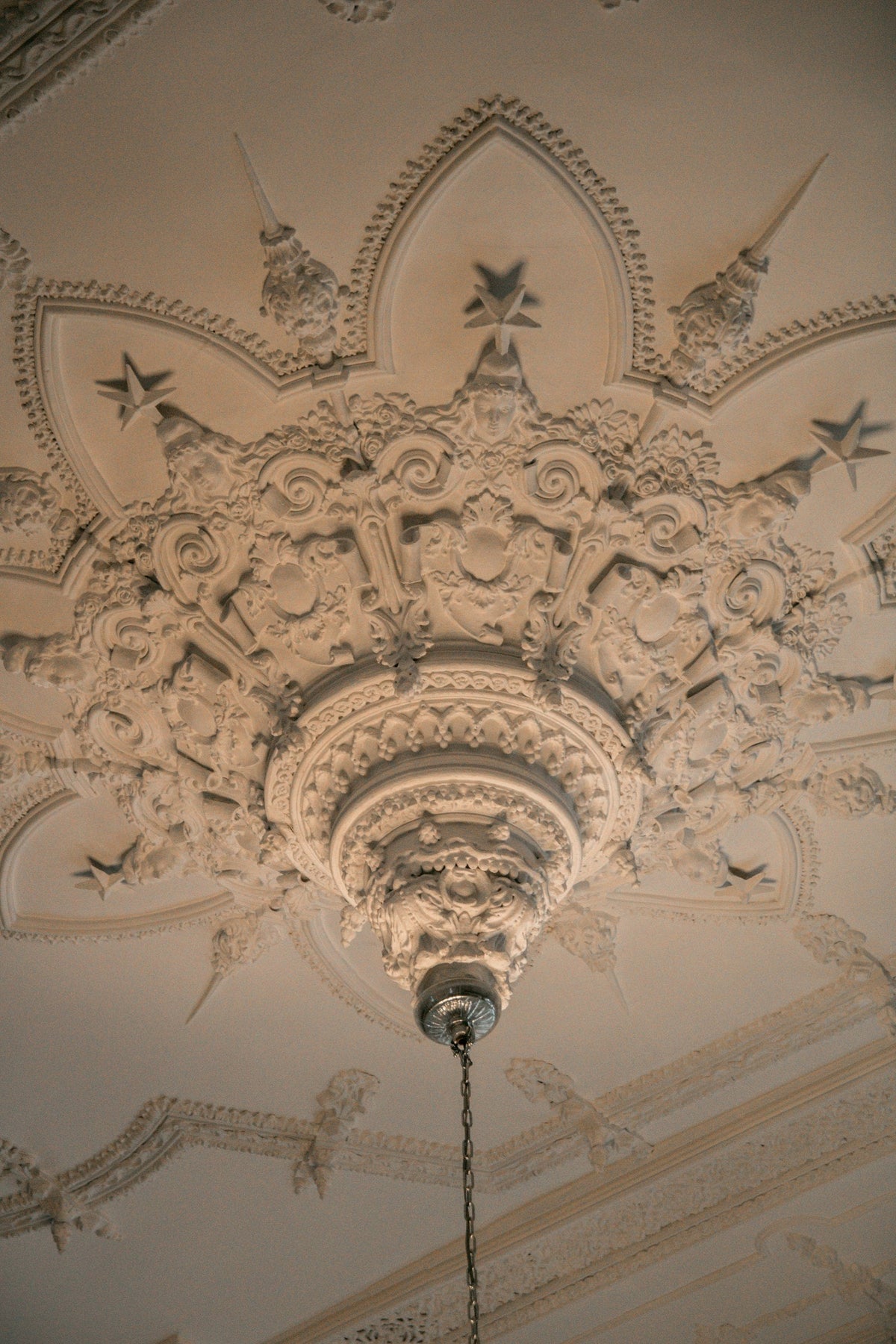
Most of what is written about polished plaster assumes a feature wall in a home. But the material's oldest home is the grand room: the ballroom, the banking hall, the hotel stair. Working at that scale is the same craft under very different rules, and understanding those rules is useful even if your own project is a dining room, because scale is only ever a question of degree.
Plaster must be worked into plaster that is still open. On a domestic wall one applicator manages this alone. On a thirty metre run, the wall must be worked by a crew moving together, each trowel handing its wet edge to the next, because a junction where fresh material meets material that has closed will read as a line in low side light forever. Large format work is therefore choreography as much as trowelling: who starts where, who follows, where the day's work can honestly stop. The stopping points are planned at survey, hidden at corners, piers and shadow gaps, never in the middle of a run.
A grand room usually means grand windows, long sightlines and chandeliers, and all three interrogate a wall. Light travelling almost parallel to a long surface exposes every undulation in the substrate, which is why preparation consumes more of the programme than the finish itself. The flatter the base, the quieter the wall, and in a big room quietness is the luxury.
A room this size crosses many tubs, which is why consistent tinting matters at scale: every tub dosed identically, batched for the job, so the final bay matches the first. Material is ordered as one batch with contingency, never topped up ad hoc from a later mix.
A room built for a thousand guests will be brushed by a thousand shoulders, chair backs and trolleys. The specification answers this before the first coat: harder wearing finishes at touch height, waxed and sealed accordingly, with a maintenance plan that treats the wall like the stone it is. Decorative does not have to mean delicate; specified honestly, these surfaces outlast the fashions around them.
If you are specifying decorative finishes for a large space, commercial or private, start the conversation at survey stage. The earlier the sequencing and stopping points enter the drawings, the calmer the programme, and the wall, will be.
An outline of what limewash training covers about mixing limewash and the risks of slaking lime, and how to ask Zavoré about it.
BasementsA guide to decorative finishes for London basements, covering media rooms, gyms and wine rooms, why waterproofing must come first, and wh...
CheshireAn in depth guide to seamless microcement and tadelakt bathrooms for homes across Cheshire, and how to choose between them.
CheshireA guide to polished plaster and other decorative finishes for the large modern homes of Wilmslow and Alderley Edge, and where they fit in...
CheshireChester and the Cheshire countryside are full of timber framed, Georgian and Victorian buildings. This guide explains why lime finishes s...
Greater ManchesterHow microcement floors work in kitchen extensions across Greater Manchester, from the screed underneath to underfloor heating and everyda...

Providing luxury finishes for the most prestigious addresses in the world
Venetian plaster, limewash, microcement, tadelakt, metallics, sculptural plaster and gold leaf, supplied and installed by our own team, with Venetian plaster taught at our Birmingham studio.
One list, run by the people who make the material. No noise, and nothing we would not want to read ourselves.
We email as the house has something worth saying, never daily. Unsubscribe from any email, or reply STOP to any text. We never pass your details to anyone.