

✦
Where Artistry Begins
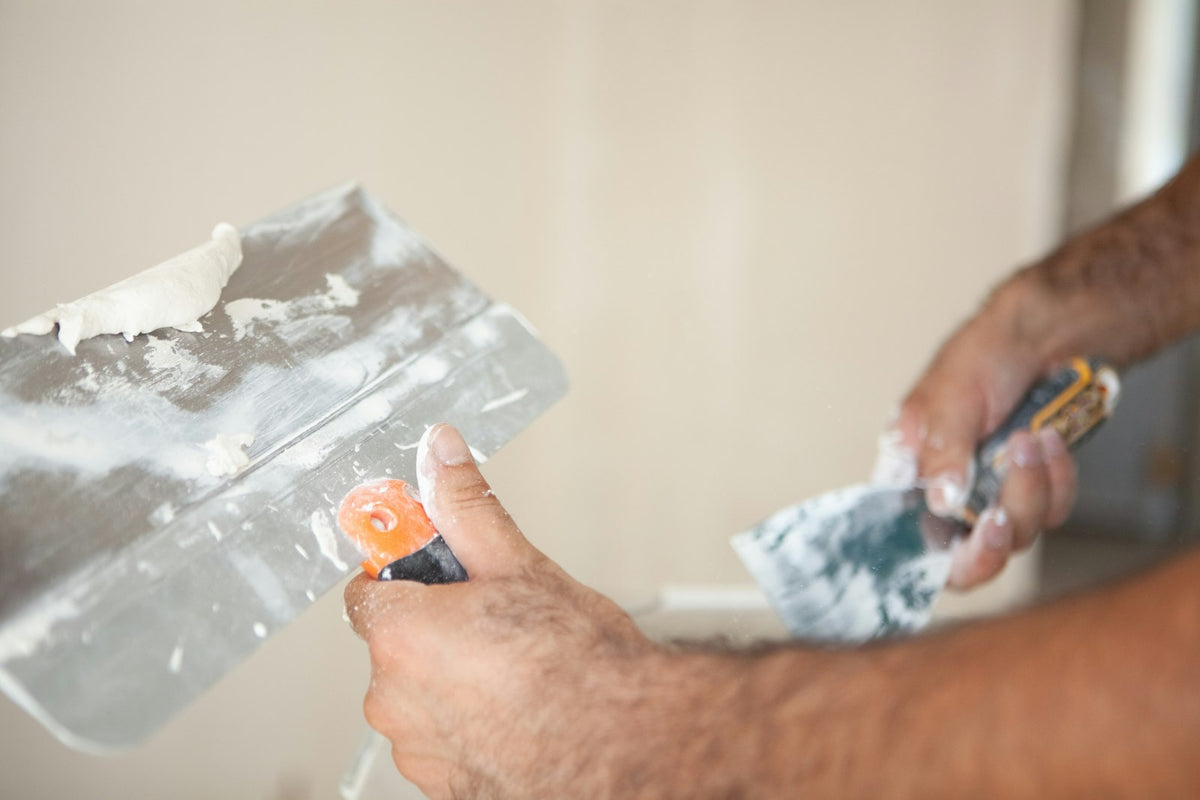
Venetian plaster pros and cons can be summed up quickly. Real lime Venetian plaster gives a deep, seamless, marble like surface that lets solid walls breathe and ages with grace. Against that, it asks for very flat walls, patient drying between coats and skilled application, and it has no place inside a shower. Zavoré installs it for homes across the UK and will tell you frankly whether it suits your rooms.
For background on the material, read our Venetian plaster guide, and to see where our artisans work, visit the page on Venetian plastering in the UK. What follows weighs each advantage against each drawback, so the decision is yours before a single coat goes on.
The first advantage is how it looks. Venetian plaster is built up in thin layers and then burnished, so light travels into the surface rather than bouncing off it. The result has cloud and veining that reads like polished stone, yet it is a continuous skin with no grout lines or joins. It gives the look of marble without being marble, which means a whole wall, a curved stair or a ceiling can carry it.
The second is breathability. Lime plaster lets moisture move through it, so on solid masonry it works with the building instead of sealing damp behind a film. Victorian terraces, Georgian townhouses and stone cottages all benefit from that. Acrylic look alikes form a skin on the surface, which is fine on new plasterboard but less kind to an old wall.
The third is colour. We offer 48 house colours, or we can match any NCS reference, and the tint runs through the material rather than sitting on top. You can order a sample board to see the shade in the daylight of the room before anything is decided.
Finally there is variety within the family. Polished plaster gives the highest sheen, marmorino a softer satin, and travertino a stone pattern with open pores. One supplier and one team can therefore treat a hall, a dining room and a bedroom differently while keeping the house coherent.
Preparation is the main one. A burnished surface exaggerates every bump, so a wavy wall needs skimming or filling first, and that adds time. On plasterboard, joints must be reinforced and the correct primer used, otherwise hairline lines can telegraph through later.
Drying is the second. Each coat has to cure before the next, so the room is out of action for a while and does well with gentle, steady heat rather than blasting radiators. That is why we plan installations in blocks of days with the same artisans on site from start to finish.
Third, wet zones. Venetian plaster is excellent on the dry walls of a bathroom, but inside a shower enclosure the right answer is tadelakt or microcement laid over a properly waterproofed wall. Even sealed microcement still relies on tanking behind it.
Fourth, lime is caustic while it is being worked. That is a matter for the installers rather than the household, but it explains why children and pets stay out of the room while coats go on.
Paint is cheaper and quicker, and nobody pretends otherwise. What paint cannot give is the depth and the slight coolness under the hand. Tiles are tougher in a splash zone, but they bring grout lines and a hard, flat look. Venetian plaster sits between the two, a decorative wall finish rather than a cladding, and it is worth it where the wall is meant to be noticed, such as a hallway, a dining room or the wall behind a bed.
Cost depends on the area, the condition of the walls, access and the finish chosen. We do not publish installation prices, because a survey almost always changes the picture.
Living rooms, dining rooms, bedrooms, halls and stairwells are natural homes for it. Kitchens work away from the hob and sink splash zones, and the dry walls of a bathroom or cloakroom are fine. Ceilings can carry it too, though that is slow, careful work. The places to avoid are the inside of a shower and any wall with an unresolved damp problem, which must be fixed first.
House type matters as well. In a period home with solid walls, a lime finish is the natural pairing. In a new build with flat plasterboard, a polished finish can look crisp, provided the boards and joints are properly treated.
Most of the cons disappear when the process is followed. Here is how we handle a job through our Venetian plaster installation service.
If you would rather learn the craft, Zavoré Academy runs a three day Beginner Course, a four day Advanced Course and three day 1 to 1 Training in Birmingham, London and Manchester, with all materials included.
Any plaster can crack if the background moves or if joints in plasterboard are left untreated. That is why the survey looks hard at the wall underneath and why reinforcement and the correct primer matter. On a sound, well prepared wall, fine cracking is far less likely.
On dry walls it needs little more than a soft, dry cloth for dust. A wax or sealer improves resistance to marks in busy areas. It is not intended to be scrubbed like a tile, so plan it away from the heaviest splash zones.
Often yes, and lime is especially well suited to solid masonry because it breathes. Loose paint, damp or a very uneven surface must be dealt with first, and the survey tells you exactly what is needed before any price is agreed.
Neither is right everywhere. Lime breathes and suits older solid walls, while acrylic forms a film that can be practical on new plasterboard. The choice depends on the building, the room and the look you want.
If you are still weighing things up, email photos and measurements of your walls to sales@zavore.co.uk or ring +44 7592 929191, and we will talk through the honest pros and cons for your home.
How bas relief walls are designed and sculpted by hand for Sheffield homes and interiors, from stairwells and bedrooms to receptions, lit...
Bas ReliefHow landscape and mountain bas relief walls are composed in layers, sculpted by hand on site, finished in white or colour and lit, with i...
Bas ReliefIdeas and practical advice for ocean and wave bas relief walls, from wave designs and rooms to lighting, colour, care and how a commissio...
Bas ReliefClassical bas relief explained, from acanthus leaves and garlands to robed figures and cherubs, with where each motif suits and how a com...
Bas ReliefHow sculpted plaster logos and brand feature walls are designed and carved in bas relief, from receptions and hotel lobbies to lighting, ...
Bas ReliefHow bas relief with gold leaf and gilded details works, from choosing which edges to gild and the right background colour to lighting, ca...

Providing luxury finishes for the most prestigious addresses in the world
Venetian plaster, limewash, microcement, tadelakt, metallics, sculptural plaster and gold leaf, supplied and installed by our own team, with Venetian plaster taught at our Birmingham studio.
One list, run by the people who make the material. No noise, and nothing we would not want to read ourselves.
We email as the house has something worth saying, never daily. Unsubscribe from any email, or reply STOP to any text. We never pass your details to anyone.