

✦
Where Artistry Begins
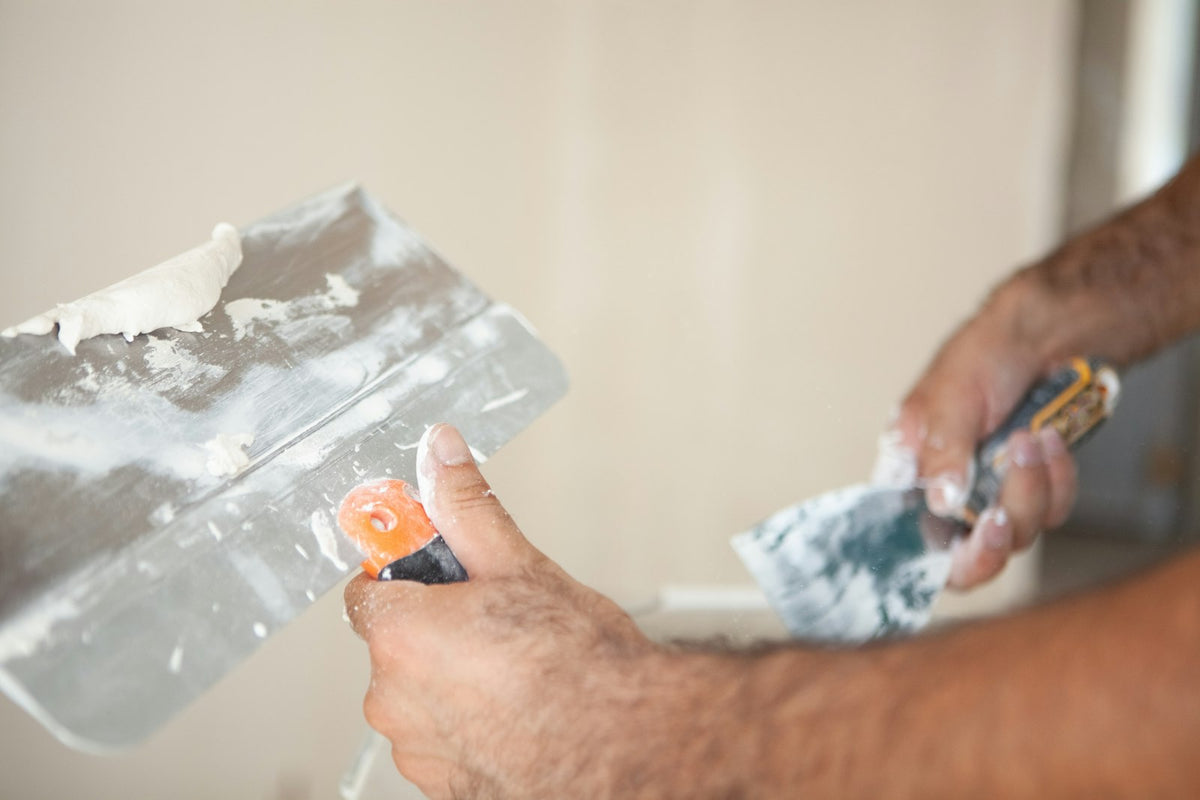
Venetian plastering is the craft of laying a lime and marble plaster by hand in several thin coats, then pressing and burnishing the last coat with a steel trowel until it glows with the depth of polished stone. Zavoré installs, supplies and teaches it across the UK. The result gives a marble look, but it is a plaster, not marble, and it can be left matt, honed or polished to a high sheen.
Our Venetian plaster page shows the finishes and colours, and the towns and cities we cover are listed under Venetian plastering across the UK. Here we explain the craft in plain English, what goes into the tub, what happens on the wall and where it works in a home.
The traditional recipe is very simple. Slaked lime putty, called grassello in Italy, is mixed with marble dust graded from coarse to fine. Lime is the binder, and as it cures it slowly hardens into a surface with the feel of stone. The marble gives body, sparkle and that familiar mineral look. Pigments tint the mix, and we colour every batch to match the approved sample, choosing from 48 house shades or any NCS reference.
Many products sold as Venetian plaster today are acrylic, with marble or other fillers held in a synthetic binder. They form a film on the wall rather than becoming part of it. They have their place on new, dry surfaces, but they do not breathe in the way lime does, and that matters on the solid brick and stone walls of older British houses.
Each coat has to be laid at the right time, so a job is planned in blocks of days and the artisans who begin a room are the ones who finish it. Nothing is rolled or sprayed. The movement in the colour comes from many thin layers, each pressed by hand, so every wall ends up with a character of its own.
Burnishing is the step that separates Venetian plastering from ordinary skimming. As the final coat firms up, the artisan passes a clean steel trowel over it with steady pressure. That compacts the surface, closes tiny pores and lays the fine marble flat so it reflects. The harder and longer the burnish, the higher the sheen.
Wax goes on last. It protects the surface against marks, makes it easier to wipe and adds a soft lustre. In historic Venice the final coat was sometimes sealed instead with white soap dissolved in warm water. A waxed wall is not waterproof, but it copes well with the odd splash in a kitchen or cloakroom.
The names overlap, which causes plenty of confusion. Venetian plaster is the broad family of lime and marble finishes. Polished plaster usually means the finest grade, burnished to a glassy shine and sometimes called stucco lustro. Marmorino keeps a coarser marble grain, so it has visible texture and a honed sheen, and it was the finish of Venetian palace fronts. Travertino imitates travertine stone with its pits and veins. All of them are laid by hand in thin coats, and all are made from the same basic lime and marble recipe.
It works on almost any dry interior wall or ceiling. Favourite places include entrance halls and stairs, living rooms, dining rooms, bedrooms, a fireplace wall or media wall, and powder rooms. In commercial interiors it appears in hotel lobbies, restaurants, shops and offices. Lime finishes are a natural partner for Victorian and Georgian houses, while flat new plasterboard walls in modern flats take a high polish well once they are properly prepared.
There are limits. Polished finishes show every dip, so walls must be flat. Inside a shower, use tadelakt, or microcement over a waterproofed wall, and remember that tanking is still needed behind any shower even when a sealer keeps microcement washable. Lime is caustic while wet, so floors and joinery are covered during the work.
Both. Our Venetian plaster installation service begins with your photos, drawings and rough room sizes, followed by a survey before any price, a sample for you to approve and then dates. If you would rather learn, courses are taught in person at the Zavoré Academy in Birmingham and at our London and Manchester centres. The Beginner Course takes 3 days, the Advanced Course 4 days and 1 to 1 Training 3 days, with all materials included. Plaster materials are sold in our shop for decorators who already have the skill.
No. It contains genuine marble dust bound with lime, so it gives a marble look, but it is a plaster laid by hand in thin coats rather than stone cut from a quarry. It is far lighter than stone cladding and can follow curves, arches and columns.
It depends on the walls, the preparation they need and the finish chosen, so the programme is set at the survey. Each coat needs the right drying time before the next goes on, which is why the work is arranged in blocks of days.
Yes, once the joints are reinforced and the right primer is applied. Without that preparation, joint lines can show or crack later. The base coats then build the flat surface that a polished finish needs.
Very little. A sealed or waxed surface can be wiped with a soft, slightly damp cloth. In busy places such as halls and stairs, a fresh coat of wax every so often can bring back the sheen.
To ask about Venetian plastering for your home, ring +44 7592 929191 (Monday to Saturday, 9am to 6pm) or email sales@zavore.co.uk with photos and rough measurements. A sample board lets you see the colours on your wall before you decide.
An outline of what limewash training covers about mixing limewash and the risks of slaking lime, and how to ask Zavoré about it.
BasementsA guide to decorative finishes for London basements, covering media rooms, gyms and wine rooms, why waterproofing must come first, and wh...
CheshireAn in depth guide to seamless microcement and tadelakt bathrooms for homes across Cheshire, and how to choose between them.
CheshireA guide to polished plaster and other decorative finishes for the large modern homes of Wilmslow and Alderley Edge, and where they fit in...
CheshireChester and the Cheshire countryside are full of timber framed, Georgian and Victorian buildings. This guide explains why lime finishes s...
Greater ManchesterHow microcement floors work in kitchen extensions across Greater Manchester, from the screed underneath to underfloor heating and everyda...

Providing luxury finishes for the most prestigious addresses in the world
Venetian plaster, limewash, microcement, tadelakt, metallics, sculptural plaster and gold leaf, supplied and installed by our own team, with Venetian plaster taught at our Birmingham studio.
One list, run by the people who make the material. No noise, and nothing we would not want to read ourselves.
We email as the house has something worth saying, never daily. Unsubscribe from any email, or reply STOP to any text. We never pass your details to anyone.