

✦
Where Artistry Begins
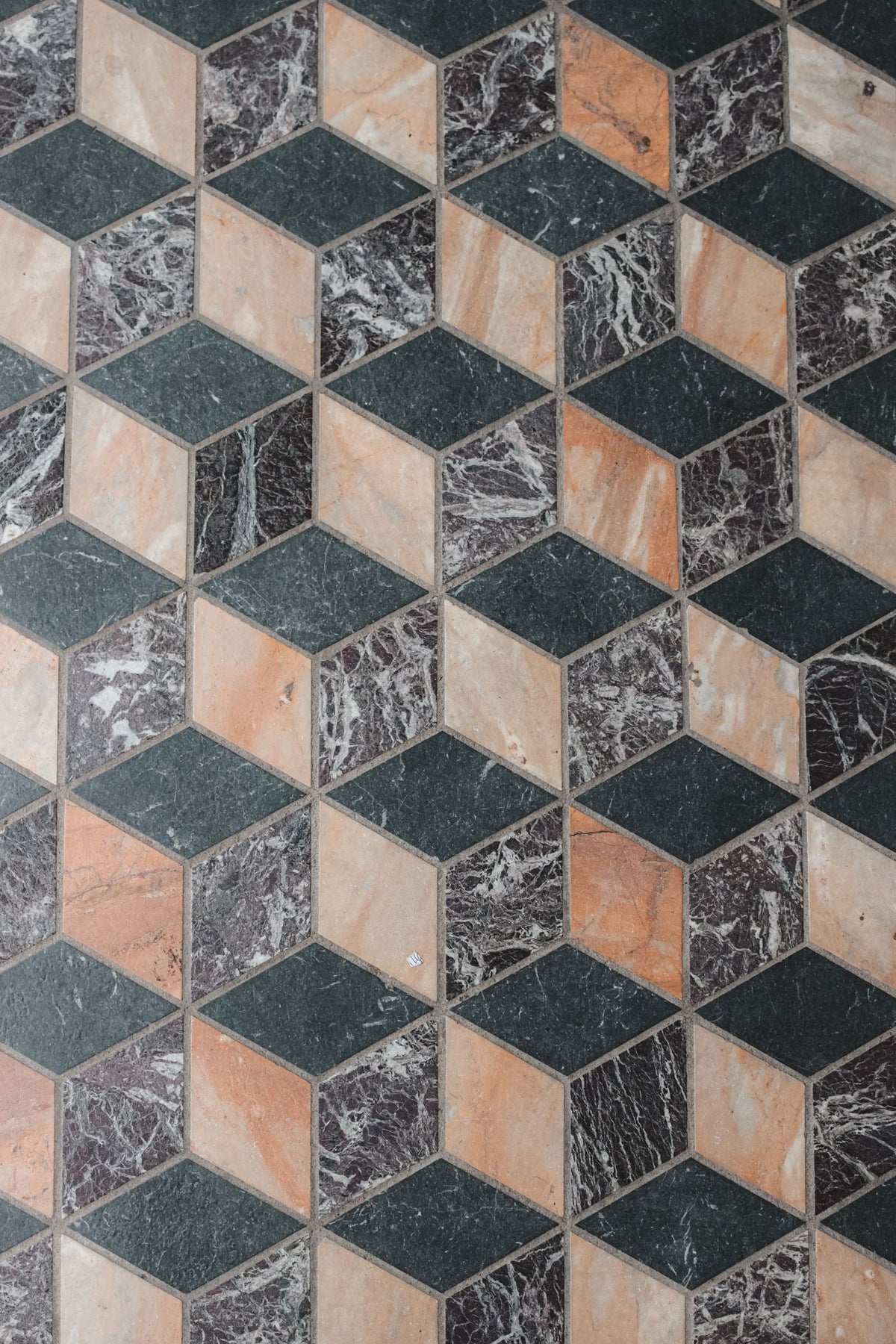
Marble vein work in Venetian plaster means drawing flowing veins through the surface so a wall reads like natural marble, and it is taught on the 4 day Advanced Course at the Zavoré Academy in Birmingham. It takes practice to look convincing, and it pairs naturally with polishing to a high gloss.
This guide explains what vein work involves, why it is harder than it looks, and how the Advanced Course teaches it.
It is the craft of building veins into the plaster itself, so that a polished wall carries the same flowing lines you see in a slab of marble. The veins sit within the finish rather than on top of it, which is why a well made wall has depth.
In natural marble, veins are bands of mineral that run through the stone. They change direction, thicken and thin, split into branches and fade away. Vein work copies that behaviour with thin layers of plaster in different tones, worked into the wall while the surface can still be moved.
It is a different idea from a plain polished finish. A plain finish aims for even colour and sheen. Vein work aims for controlled variation. If you want the background first, our guide to Venetian marble plaster explains the look, and the polished plaster page shows the wider family of finishes.
Because a vein that looks drawn on is worse than no vein at all. The skill is making lines that look natural, and that depends on touch, which only comes from repetition on a real surface.
Your tutor helps you control the things that separate a convincing vein from an obvious one.
None of this can be learned from reading. You need the material under the trowel, with someone beside you who can say when a line is too heavy or too straight. That is why the course is taught in person, on panels, with up to six students.
Polishing is what makes veins look as though they sit inside the stone. A high gloss surface reflects light through the top layers and gives the veins visible depth, so the two skills belong together.
That is also why they are taught on the same course. The Advanced syllabus runs from vein work into sanding techniques and polishing to a high gloss, so you learn to lay the pattern and then bring it to life. Gloss shows every flaw as well as every strength, which makes careful vein work even more important.
If you are already curious about how marble compares to polished plaster, read polished plaster vs marble. For the wider course picture, see advanced Venetian plastering training.
Vein work is taught on the Advanced Course, and you can also ask for it on the 1 to 1 Training. It is not part of the Beginner Course syllabus, which concentrates on foundations. The table shows where each course stands.
| Course | Days and price | Vein work |
|---|---|---|
| Beginner Course | 3 days, £750 | Not on the syllabus. Covers theory, preparation, base coats, textures, systems, Marmorino, polished plaster and metallics. |
| Advanced Course | 4 days, £1,200 | Taught, alongside sanding, high gloss polishing, stencil work, artificial rock and tinting. |
| 1 to 1 Training | 3 days, £1,500 | Can be the focus, because the days are shaped around what you want to learn. |
The Advanced Course is for beginners who have done the first course, or people from site who already handle plaster. You can read the details on the Advanced Course page, or explore the 1 to 1 Training if vein work is the one thing you want to master. Every course runs from 10am to 5pm.
You take home finished panels, a Zavoré certificate and a private course group with a helpline for life. Advanced students also get help to find, price and win a first paid decorative job.
The panels matter more than they sound. A panel with real veins in a finish you made yourself is a far stronger conversation starter with a client than a photograph of someone else's wall.
Marble effect walls suit feature walls, entrance halls and fireplace surrounds. See feature walls for how clients use them, and remember that Zavoré also installs Venetian plaster across the UK if you would rather have a wall done for you.
No. Vein work is part of the Advanced Course, which builds on the Beginner Course. If you have never used Venetian plaster, start with the Beginner Course and move on when you are ready.
No. You are shown how to build veins with the trowel and the plaster, and the skill comes from practice rather than artistic talent. Steady hands and patience help more than a sketchbook.
Yes, the 1 to 1 Training is shaped entirely around what you want to learn, so vein work can be the focus. Tell us what you want when you book so the three days are planned around it.
Because a high gloss surface gives veins depth and makes them look as though they sit inside the stone. Both skills are taught on the Advanced Course.
Up to six students, which means your tutor can watch your technique and correct it as you work.
To book, call 07592 929191 or email sales@zavore.co.uk, or see course dates on the training page. A bench can be held with half the price and the rest paid on the day, and dates are confirmed by email within 24 hours of booking.
An outline of what limewash training covers about mixing limewash and the risks of slaking lime, and how to ask Zavoré about it.
BasementsA guide to decorative finishes for London basements, covering media rooms, gyms and wine rooms, why waterproofing must come first, and wh...
CheshireAn in depth guide to seamless microcement and tadelakt bathrooms for homes across Cheshire, and how to choose between them.
CheshireA guide to polished plaster and other decorative finishes for the large modern homes of Wilmslow and Alderley Edge, and where they fit in...
CheshireChester and the Cheshire countryside are full of timber framed, Georgian and Victorian buildings. This guide explains why lime finishes s...
Greater ManchesterHow microcement floors work in kitchen extensions across Greater Manchester, from the screed underneath to underfloor heating and everyda...

Providing luxury finishes for the most prestigious addresses in the world
Venetian plaster, limewash, microcement, tadelakt, metallics, sculptural plaster and gold leaf, supplied and installed by our own team, with Venetian plaster taught at our Birmingham studio.
One list, run by the people who make the material. No noise, and nothing we would not want to read ourselves.
We email as the house has something worth saying, never daily. Unsubscribe from any email, or reply STOP to any text. We never pass your details to anyone.