

✦
Where Artistry Begins
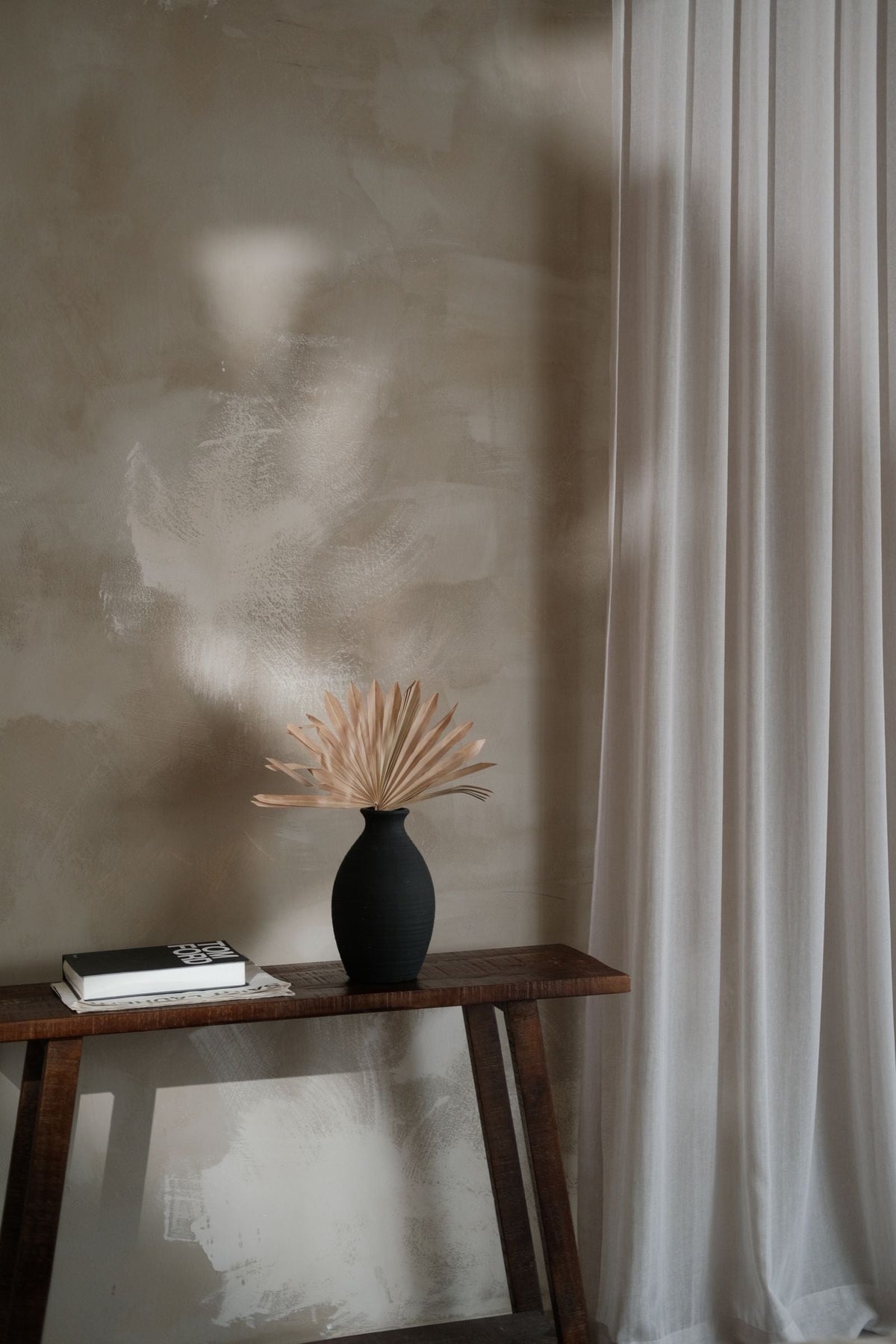
Venetian plaster suits Ealing family homes well, from the Edwardian houses around Ealing Common to the 1930s semis of Hanger Hill and Pitshanger, provided the walls beneath are sound and flat. Zavoré installs, supplies and teaches authentic Italian Venetian plaster, and our own artisans lay it in Ealing halls, living rooms, stairwells and rear extensions once a survey is done and a sample has been approved.
For who does the work and how a job is put together, our page on Venetian plaster installation walks through the whole process, and Venetian plaster in London covers the boroughs our artisans reach across the capital. This post stays with the houses themselves, and what an Ealing household should weigh up before choosing a polished wall.
Ealing is a borough of family houses, and broadly they fall into a few familiar types. Streets close to Ealing Broadway, Ealing Common and South Ealing hold plenty of late Victorian and Edwardian houses with tall ceilings, deep skirtings, picture rails and wide entrance halls. Further out, around Hanger Hill, Pitshanger, Northfields and West Ealing, you find long roads of interwar semis and detached houses with bay windows, slightly lower ceilings and more compact rooms. Many of both kinds have since grown at the back with a kitchen extension or upwards with a loft room.
All of them can carry Venetian plaster beautifully. What changes from house to house is what lies under the paint, and how a busy family actually uses each room.
Usually, yes. Edwardian walls are mostly solid brick with an early plaster on top, often patched over the decades with modern skim where sockets moved or cracks were filled. Lime breathes, so a lime based finish lets moisture pass through a solid wall rather than sealing it in. Acrylic products form a film across the surface, which is less kind to old masonry. That is why, for an older Ealing house, we lean towards marmorino or a lime Venetian plaster.
At the survey we sound the walls for hollow patches, note any cracking and explain honestly whether repair or a fresh skim has to come first. Polish will not disguise a crack, it draws the eye to it, and a crack that is still moving needs its cause understood before any finish goes on.
Edwardian halls often keep a picture rail and a run of cornice. The plaster can stop crisply at the rail with paint above, or run from skirting to ceiling so the hall feels taller. Settling that early means the sample shows the effect you will actually live with.
Interwar houses are often a patchwork. Original plaster sits beside plasterboard partitions, boxed in pipes and old chases from rewiring. Each of those needs levelling, because polished plaster catches every ripple once the light moves across it. Where there is board, the joints are taped and reinforced and the right primer goes on, so no faint lines appear months later.
The front room of a 1930s semi usually has a chimney breast, and a fireplace wall in a marble effect finish gives that room a calm focal point without changing its shape. Stair walls are another good choice, since they are tall, plain and seen from both floors.
A great many Ealing families have built out at the back, creating a kitchen diner that opens onto the garden through wide glazed doors. These rooms are normally finished in new plasterboard or a fresh skim. New plaster must be properly dry before anything goes over it, and the walls need to be flat right across their width.
A single polished feature wall behind the dining table, or a softer marmorino over the whole space, can link a bright modern extension to the older rooms in front. Near the hob and sink a waxed or sealed finish copes with light splashes, but Venetian plaster is not made for the inside of a shower. There, tadelakt or microcement on a properly waterproofed wall is the right answer.
It can be. Halls and stairs take knocks from school bags, scooters and buggies, kitchens get steam and splashes, and a playroom wall gets everything. Rather than promise one finish for every room, we talk through how each space is used at the survey and suggest a finish and protective top coat to match. Sometimes that means polish in the hall and a matt lime finish in the busier rooms.
Our sample board is worth propping against the wall you have in mind and viewing in the morning and again in the evening, because a warm white and a cool grey can swap character as the daylight changes. You can also see the finishes at our London showroom and training centre, by appointment. If your home is a converted flat, many leases need the freeholder's permission, so check yours. For a listed house, listed building consent is generally needed for works that affect a listed building's character, so check with your local planning authority.
To compare the finishes themselves, from classic polish to marmorino, our Venetian plaster page explains how each one is built up and where it suits.
It gives a marble look but it is not marble. It is slaked lime and powdered marble laid in very thin coats and burnished by hand, so the wall gains depth and a soft stone sheen. In an Ealing hall it reads as stone without the weight, the joints or the cold feel of slabs.
No, a polished surface shows cracks more, not less. We repair and level the wall first, and if a crack is still moving we want to know why before any finish goes on. That honesty at the survey saves disappointment later, and keeps the finished wall looking as it did on the sample.
Entrance halls, stair walls, living rooms with a chimney breast and the feature wall of a kitchen extension are the usual favourites. These are plain, generous surfaces where the movement of the plaster can be seen. Rooms broken up by panelling or heavy shelving give the finish less to do.
Yes, in person. Courses run at the Zavoré Academy in Birmingham and at our London and Manchester centres. The Beginner Course is 3 days, the Advanced Course 4 days and 1 to 1 Training 3 days, with all materials included. There are no courses over the internet.
If you are planning Venetian plaster for an Ealing home, call +44 7592 929191, Monday to Saturday from 9am to 6pm, or email sales@zavore.co.uk with a few photos, rough measurements and your address. We will reply with what the walls need and the next step towards a survey.
An outline of what limewash training covers about mixing limewash and the risks of slaking lime, and how to ask Zavoré about it.
BasementsA guide to decorative finishes for London basements, covering media rooms, gyms and wine rooms, why waterproofing must come first, and wh...
CheshireAn in depth guide to seamless microcement and tadelakt bathrooms for homes across Cheshire, and how to choose between them.
CheshireA guide to polished plaster and other decorative finishes for the large modern homes of Wilmslow and Alderley Edge, and where they fit in...
CheshireChester and the Cheshire countryside are full of timber framed, Georgian and Victorian buildings. This guide explains why lime finishes s...
Greater ManchesterHow microcement floors work in kitchen extensions across Greater Manchester, from the screed underneath to underfloor heating and everyda...

Providing luxury finishes for the most prestigious addresses in the world
Venetian plaster, limewash, microcement, tadelakt, metallics, sculptural plaster and gold leaf, supplied and installed by our own team, with Venetian plaster taught at our Birmingham studio.
One list, run by the people who make the material. No noise, and nothing we would not want to read ourselves.
We email as the house has something worth saying, never daily. Unsubscribe from any email, or reply STOP to any text. We never pass your details to anyone.