

✦
Where Artistry Begins
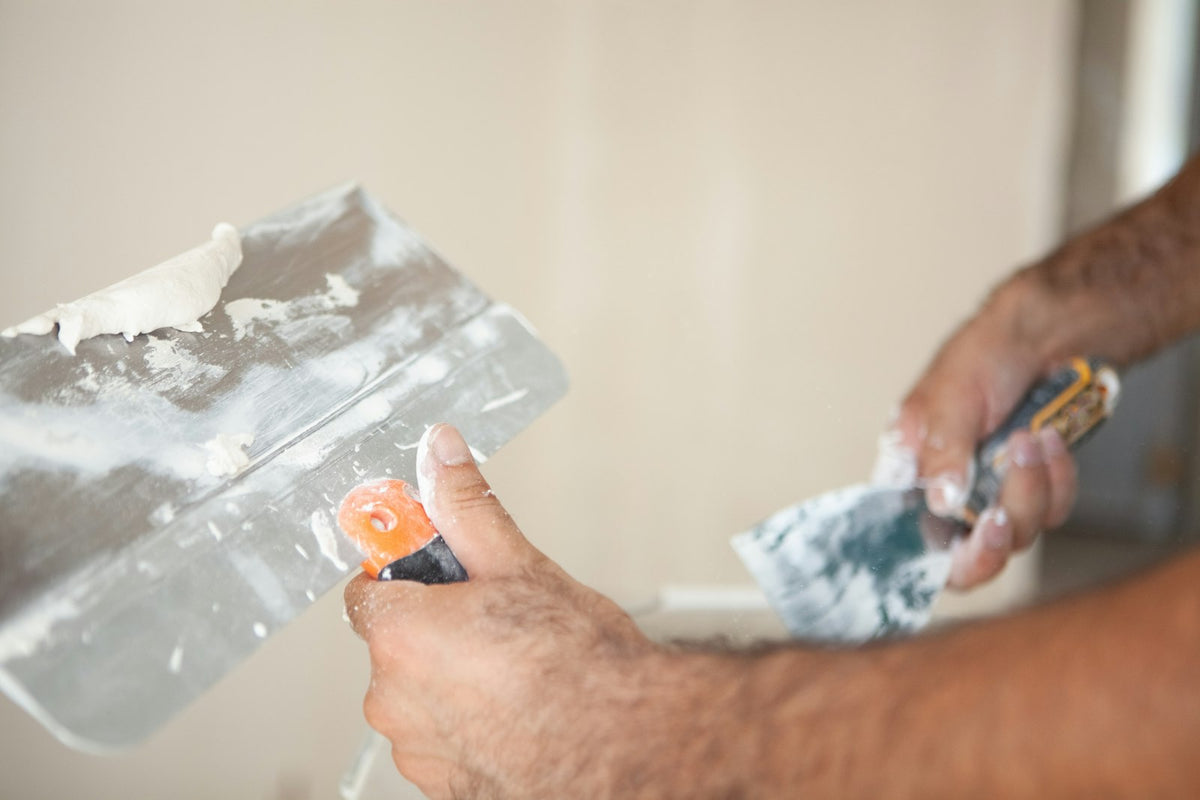
Skimming and Venetian plastering do different jobs. A skim coat is a thin layer of finishing plaster that makes a wall smooth and flat, ready for paint. Venetian plastering is a decorative finish of lime and marble, laid in several thin coats and burnished, so the plaster itself becomes the final surface. Across the UK the two often work together, because a flat skimmed wall is frequently the base Venetian plaster needs. Zavoré installs Venetian plaster with our own artisans.
Our page on Venetian plaster explains the finish itself, and Venetian plastering across the UK lists the towns and cities we cover. This guide sets out what each process is, where they overlap and how to decide what your walls need.
Skimming means trowelling a thin coat of finishing plaster over an existing wall or plasterboard to give a smooth, even surface. It hides tired, patched or textured walls, closes small cracks and gives decorators a clean base. Once dry, a skimmed wall is normally sealed with a mist coat and painted.
A good skim is flat and smooth, but it is meant to be plain. Nobody looks at a skimmed wall for its own sake. It is the stage that makes everything after it look right.
Venetian plastering is a decorative craft. Lime putty mixed with fine marble is pressed onto the wall with a steel trowel in a series of very thin coats, each laid in a slightly different direction. The final coats are burnished, which compresses the surface and brings up a sheen, and wax can be buffed in by hand for extra lustre and protection.
The result has cloudy depth and gentle movement, a marble look without being marble. It can be tinted to any of 48 house colours or matched to an NCS reference, and the finish ranges from the matt, grainy calm of marmorino to the glassy end of polished plaster.
The simplest way to see the difference is to compare what each process is for.
Often, but not always. Because a polished surface reflects light, it shows every dip, ridge and patch underneath. If a wall is bowed, cracked, heavily patched or textured, skimming it first gives the decorative coats a flat, sound base. If a wall is already flat, firm and clean, it may need nothing more than the right primer.
Plasterboard is a special case. The joints need reinforcing and the right primer, or they can crack and show through. Old solid masonry in a period house may be better served by a lime base rather than a modern skim, because lime breathes and suits solid walls. These are exactly the questions the survey answers before any price is given.
A fresh skim must be completely dry before priming and decorative work. Drying time depends on the thickness of the coat, the season, heating and ventilation, so there is no single number we would quote in advance. Laying lime over damp plaster risks poor bonding and blotchy colour. We judge readiness on site and plan the dates around it.
That depends on the job. On some projects your builder or a general plastering contractor skims the walls as part of a renovation, and we lay the Venetian plaster afterwards. On others it makes sense for the preparation to be part of our work. Either way, we would rather say honestly at the survey that a wall needs skimming than lay a beautiful finish over a poor base.
Our Venetian plaster installation page describes how a job runs. In short, you send photos, drawings and rough measurements, we survey before any price, you approve a sample in your colour, and dates follow. Work is planned in blocks of days so the same artisans stay on the job.
Yes, once the skim is fully dry and the right primer has gone on. A flat, freshly skimmed wall is one of the cleanest bases for Venetian plaster, because the polished coats have nothing underneath to show through.
Yes, because it involves more coats, tinted lime materials and far more skilled hand work. A skim is a preparation step, while Venetian plaster is the finished, decorative surface. Every Venetian plaster price is given after a survey, because area, height and preparation all change it.
It is possible, but the waxed surface usually needs keying and the right primer, or the new coat may not bond. It is often worth asking whether the old finish can be repaired or refreshed instead.
Yes, and many people who skim come to our in person courses. The Beginner Course is 3 days, the Advanced Course 4 days and 1 to 1 Training 3 days, all materials included, at the Zavoré Academy in Birmingham and our London and Manchester centres.
If you are not sure whether your walls need skimming first, call +44 7592 929191, Monday to Saturday, 9am to 6pm, or email sales@zavore.co.uk with photos, rough measurements and the address. The sample board helps you choose a colour while we plan the preparation.
Leeds has many Victorian terraces and villas with solid walls and original mouldings. This guide covers lime plaster repairs and coving r...
LimewashHow brush technique, thin coats and drying create the cloudy look of limewash, and how to ask Zavoré about limewash training.
Buying GuideThe Zavoré plaster range grouped by the look and job each one does, to help you shortlist finishes before ordering samples.
BirminghamA practical checklist for students before a Zavoré Academy course. Clothes, reading, questions to bring and what is already supplied at t...
ManchesterA guide to Venetian plastering in Manchester offices, receptions and commercial spaces, from finish choice and brand colours to planning ...
LimewashAn outline of what limewash training covers about mixing limewash and the risks of slaking lime, and how to ask Zavoré about it.

Providing luxury finishes for the most prestigious addresses in the world
Venetian plaster, limewash, microcement, tadelakt, metallics, sculptural plaster and gold leaf, supplied and installed by our own team, with Venetian plaster taught at our Birmingham studio.
One list, run by the people who make the material. No noise, and nothing we would not want to read ourselves.
We email as the house has something worth saying, never daily. Unsubscribe from any email, or reply STOP to any text. We never pass your details to anyone.