

✦
Where Artistry Begins
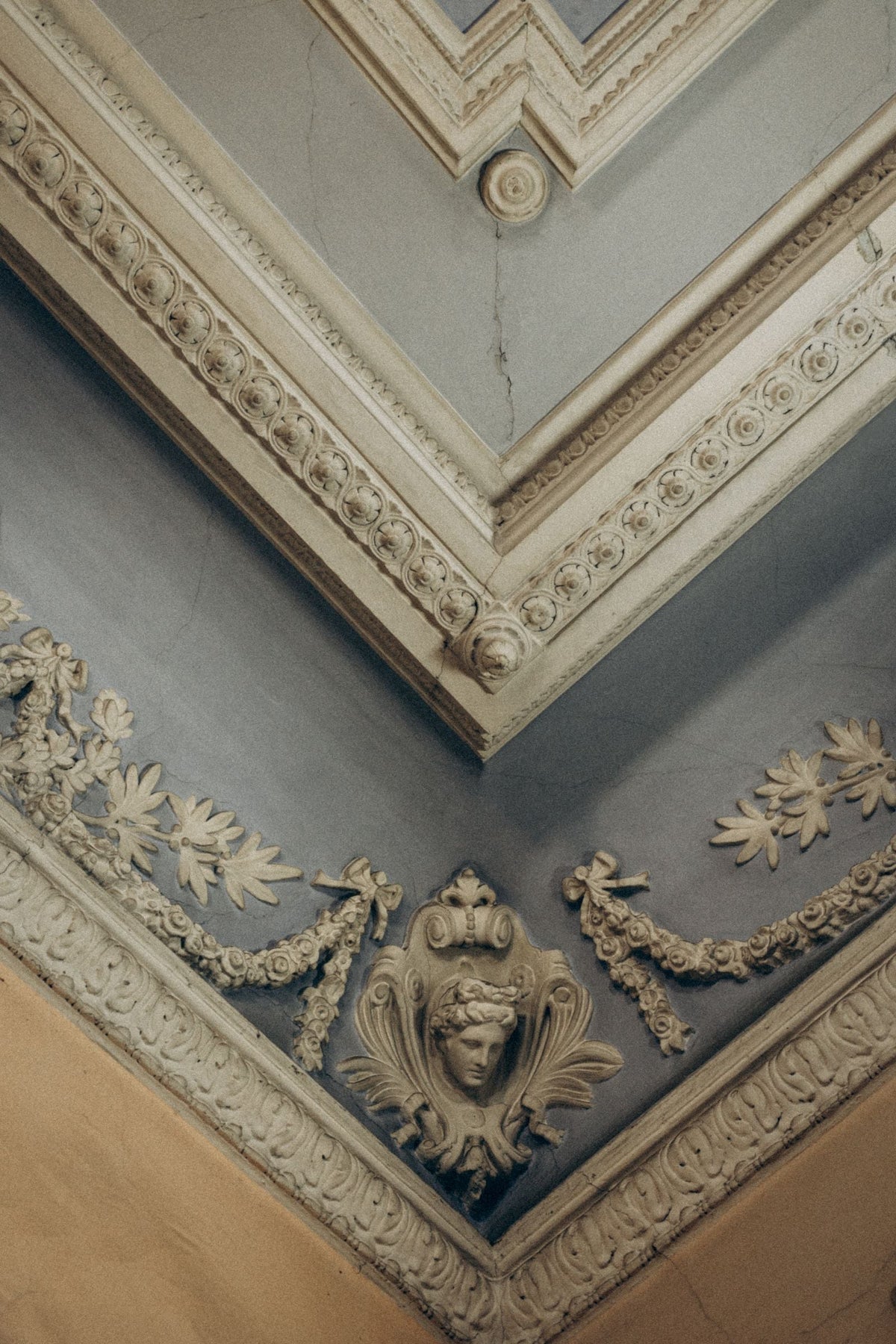
Yes, a polished plaster ceiling is usually worth it in a room where the ceiling is seen and lit, such as an entrance hall, a dining room, a stairwell or a drawing room with a chandelier, because it reflects light back down and makes the space feel taller. Zavoré installs polished plaster ceilings across the UK with our own artisans, and the result depends above all on a flat ceiling and careful preparation.
Our polished plaster page shows the finishes, and you can find the places we work under Venetian plastering across the UK. Below we set out where a ceiling earns its keep, where it does not, and what the work overhead really involves.
Most ceilings are flat white emulsion, the one surface in a room nobody notices. A polished plaster ceiling changes that. The burnished surface catches light from windows and lamps and returns it softly, so a dining room under a pendant or a hall under a lantern feels brighter and deeper. In a room with a low ceiling, a pale, gently polished finish can make the space feel taller, while a darker, glossier ceiling draws the room in and feels intimate, which many people love in a dining room or snug.
Ceilings are also spared the wear that walls take. Nobody leans on a ceiling or brushes past it with a bag, so a high polish overhead avoids the knocks and scuffs that a busy hall wall has to cope with.
Not always. In a small bedroom where the ceiling is rarely noticed, the budget might be better spent on a feature wall behind the bed. In a kitchen, where steam and cooking vapour rise, a sealed finish needs careful thought about ventilation and cleaning. In a bathroom, steam gathers at the ceiling, and Venetian plaster is not for inside showers. Over a shower, tadelakt or microcement on a waterproofed surface is the right answer.
Ceilings come into their own where they are part of the view, such as a double height hall, a stairwell seen from below, a formal dining room, a drawing room with a fireplace wall and cornice, or a room built around a decorative light. Old cornice framing a softly polished ceiling can look wonderful in a period house.
Very. Polished finishes show every dip, and on a ceiling the daylight usually arrives at a low angle from the windows, which exaggerates any wave or bump. Old lath and plaster ceilings in Victorian and Georgian houses often sag slightly or carry cracks, and these need assessing before any decorative work. New plasterboard ceilings in extensions and flats are flatter but have joints, and plasterboard joints need reinforcing and the right primer or the lines will ghost through the sheen.
At the survey we examine the ceiling for flatness, cracks, movement and any sign of damp from above, especially under bathrooms. If skimming or repair is needed first, we say so plainly, because no finish can disguise a ceiling that is failing.
Laying polished plaster overhead is physically harder than working on a wall. Each thin coat must still be pressed and burnished at exactly the right moment, but with arms raised and from a stable platform. That makes ceilings slower to lay, and the job is booked in blocks of days so the artisans who lay the first coat are the ones who burnish the last.
The room needs to be cleared or well covered, as some material inevitably falls during application. Lime is caustic while wet, so floors, furniture and joinery are protected. Light fittings should be taken down or masked by an electrician beforehand, and it helps if wiring for any new pendants is finished first. Scaffolding or a mobile tower is planned in advance for tall halls and stairwells.
A full mirror polish across a large ceiling is striking but unforgiving. Many people prefer a soft satin sheen, which still glows under lamps but is kinder to the slight movement every ceiling has. Marmorino, with its visible grain, gives a honed stone ceiling that suits period rooms. Limewash is the gentlest option, matt and chalky, and it suits old lime ceilings well because lime breathes and suits solid masonry. For the wider range of finishes our artisans lay, see our Venetian plaster installation page.
Colour matters more overhead than most people expect. A ceiling one or two shades lighter than the walls keeps a room open, while matching the walls exactly gives a wrapped, enveloping feel. We tint to 48 house colours or any NCS reference, and a sample board held up towards the ceiling, morning and evening, shows how the colour behaves.
In a flat, many leases need the freeholder’s permission for works, so check yours. In a listed house, listed building consent is generally needed for works that affect a listed building’s character, so check with your local planning authority, especially where historic ceilings or cornices are involved.
It can. A pale ceiling with a soft sheen reflects light back into the room, which tends to make it feel brighter and taller. A dark, glossy ceiling has the opposite effect and makes a room feel more enclosed and intimate.
Often, if the ceiling is sound. We assess it at the survey for sagging, cracks and loose areas. Lime finishes suit old lime ceilings because they breathe. If the ceiling needs repair or replacing first, we explain why before anything else is planned.
No. It is laid in very thin coats, so it adds little weight compared with the ceiling itself. The base must be sound, though, because no finish can hold up a ceiling that is already coming away.
Only away from the shower, in a well ventilated room, and sealed. Steam collects at the ceiling, so in a wet room or above a shower we recommend tadelakt or microcement on a waterproofed surface instead.
If you are weighing up a polished plaster ceiling, ring +44 7592 929191 (Monday to Saturday, 9am to 6pm) or email sales@zavore.co.uk with photos, the ceiling height and rough measurements, and we will go through it with you.
How microcement floors work in kitchen extensions across Greater Manchester, from the screed underneath to underfloor heating and everyda...
Buying GuideA product by product guide to the protective finishes in the Zavoré shop and which plaster each one is made for.
CommercialWhat London restaurant, bar and hotel operators should know about decorative plaster. Which finishes stand up to busy service, out of hou...
BirminghamFor people thinking about leaving another job for decorative plastering. What a beginner course at the Zavoré Academy covers, the gap bet...
TadelaktAn in depth guide to tadelakt, the polished Moroccan lime plaster, for bathrooms and wet rooms in Welsh homes, cottages and holiday lets.
DubaiHow polished plaster works on staircases and lift lobbies in Dubai villas, from tall stair walls and handrail fixings to protecting busy ...

Providing luxury finishes for the most prestigious addresses in the world
Venetian plaster, limewash, microcement, tadelakt, metallics, sculptural plaster and gold leaf, supplied and installed by our own team, with Venetian plaster taught at our Birmingham studio.
One list, run by the people who make the material. No noise, and nothing we would not want to read ourselves.
We email as the house has something worth saying, never daily. Unsubscribe from any email, or reply STOP to any text. We never pass your details to anyone.