

✦
Where Artistry Begins
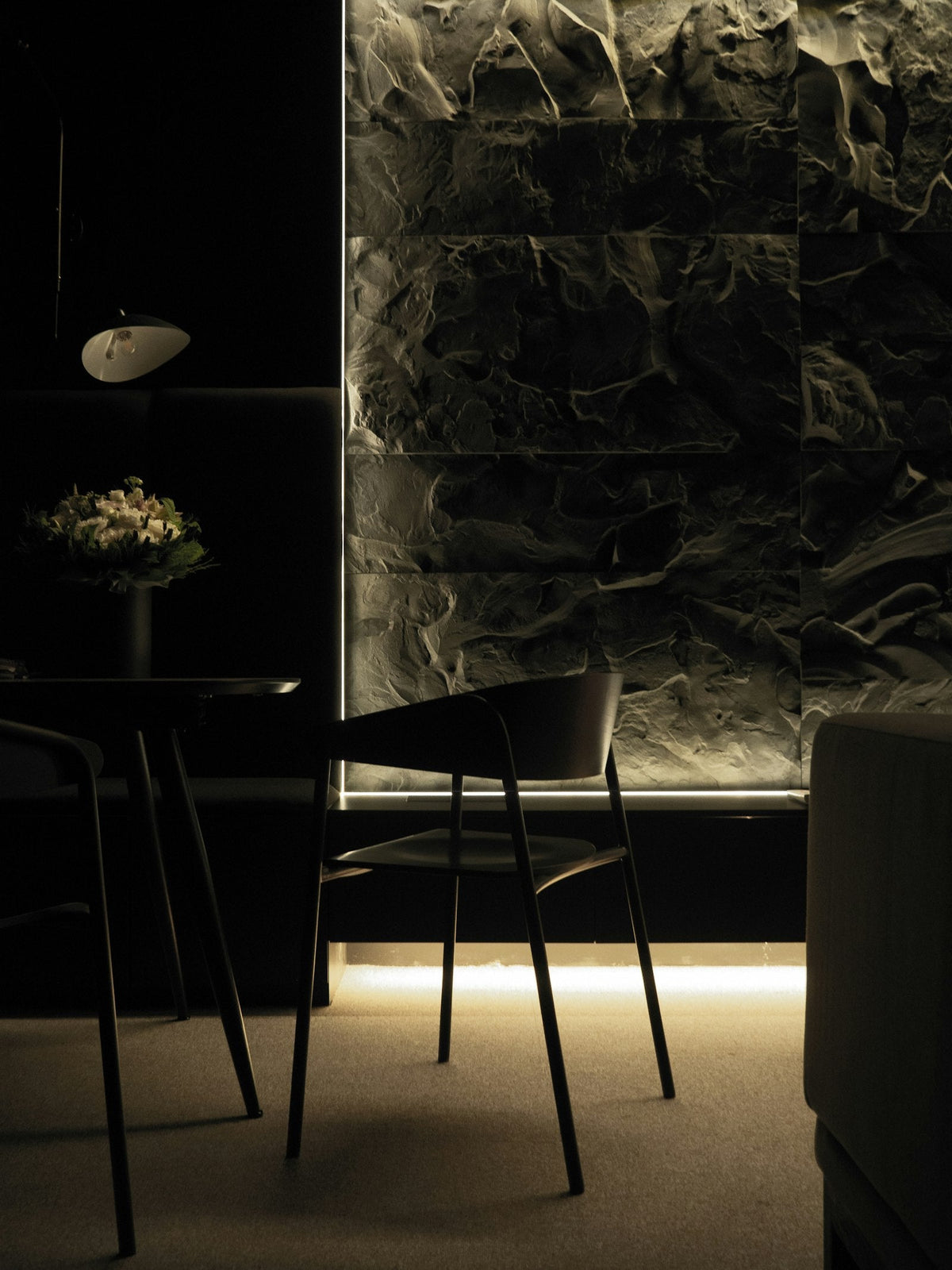
Polished plaster dining room walls give a room a quiet glow that changes from breakfast to candlelit supper. Zavoré installs them with our own artisans in London, Birmingham, Manchester and across the UK, using lime based Venetian plaster burnished to a soft sheen. It suits dining rooms well because it is calm, tactile and easy to live with, and every job starts with a survey and an approved sample.
To understand the material itself, start with our guide to polished plaster, which covers the coats, colours and levels of shine. If you would like to know where we work, our page on Venetian plastering across the UK lists the towns and regions we cover.
Paint sits flat on a wall. Polished plaster has depth, because it is laid in several translucent layers that catch light at slightly different angles. In a dining room, where people sit still for an hour or more, that slow movement across the surface becomes part of the pleasure of the room. It also absorbs a little sound compared with glossy tiles, and it feels warm rather than clinical.
Because the colour runs right through the plaster, a light knock from a chair back tends to show less than it would on emulsion. That said, it is a decorative surface, not armour, so we talk through how the room is really used before suggesting a sheen.
Dining rooms reward colour more than almost any other room. A few directions people often consider are these.
We offer 48 house colours and can match any NCS reference. The easiest way to choose is to order our sample board and prop it against the wall at supper time for a few evenings.
Preparation decides how the finished wall looks. In older houses with solid brick or stone, lime based plaster lets the wall breathe, which matters on masonry that was designed to release moisture. Acrylic products form a film instead, so we use them only where that suits the wall. On plasterboard, which is common in new builds and extensions, the joints need reinforcing and the right primer, or fine cracks can appear along the seams later.
We look closely for hollow plaster, old cracks, damp and any movement around doors and windows. If a wall needs skimming or repair first, we say so before we price, rather than finding it halfway through.
Whether you live in London, Birmingham, Manchester or elsewhere in the UK, the process is the same.
Our Venetian plaster installation page explains the finishes we lay and what happens on site. We never promise a number of weeks before the survey, because drying time depends on the wall, the weather and the room.
Most marks in a dining room come from chair backs, elbows and the odd splash of sauce. A wax top coat makes the surface easier to wipe, and a sealer adds more protection on the wall closest to the table. Day to day, a soft dry cloth or a lightly damp one is usually enough. Strong cleaners and scouring pads should be kept well away.
If you have a sideboard or serving area with real spill risk, we may suggest a slightly more protective finish there and a softer one on the other walls. Rooms often combine finishes too, with marmorino or limewash on a quieter wall, travertino around a chimney breast, or a bas relief panel as the single piece of art in the room.
If you already have a skilled decorator, plaster materials are available from our shop. For anyone who wants to learn, our courses run in person at the Zavoré Academy in Birmingham and our London and Manchester centres, with a 3 day Beginner Course, a 4 day Advanced Course and 3 day 1 to 1 Training, all materials included.
It depends on the wall area, ceiling height, how much preparation is needed and the finish you choose. We survey before pricing so the figure reflects your actual room. Photos and rough measurements let us give you a sense of what is involved before the visit.
Yes. A single feature wall behind a sideboard or around a chimney breast works well, and the other walls can be painted or limewashed. We plan the edges carefully so the change of finish looks deliberate.
A waxed or sealed finish resists everyday splashes far better than bare plaster, especially if you wipe them promptly. We suggest the right protection for the walls nearest the table once we know how the room is used.
Usually, on the dining side and on walls away from the hob and sink. Splashback zones need a different solution. We look at the whole space at the survey and suggest where each finish belongs.
To plan your dining room, ring +44 7592 929191 or email sales@zavore.co.uk and include photos, rough measurements and the address of the property. We will come back to you with the next steps.
An outline of what limewash training covers about mixing limewash and the risks of slaking lime, and how to ask Zavoré about it.
BasementsA guide to decorative finishes for London basements, covering media rooms, gyms and wine rooms, why waterproofing must come first, and wh...
CheshireAn in depth guide to seamless microcement and tadelakt bathrooms for homes across Cheshire, and how to choose between them.
CheshireA guide to polished plaster and other decorative finishes for the large modern homes of Wilmslow and Alderley Edge, and where they fit in...
CheshireChester and the Cheshire countryside are full of timber framed, Georgian and Victorian buildings. This guide explains why lime finishes s...
Greater ManchesterHow microcement floors work in kitchen extensions across Greater Manchester, from the screed underneath to underfloor heating and everyda...

Providing luxury finishes for the most prestigious addresses in the world
Venetian plaster, limewash, microcement, tadelakt, metallics, sculptural plaster and gold leaf, supplied and installed by our own team, with Venetian plaster taught at our Birmingham studio.
One list, run by the people who make the material. No noise, and nothing we would not want to read ourselves.
We email as the house has something worth saying, never daily. Unsubscribe from any email, or reply STOP to any text. We never pass your details to anyone.