

✦
Where Artistry Begins
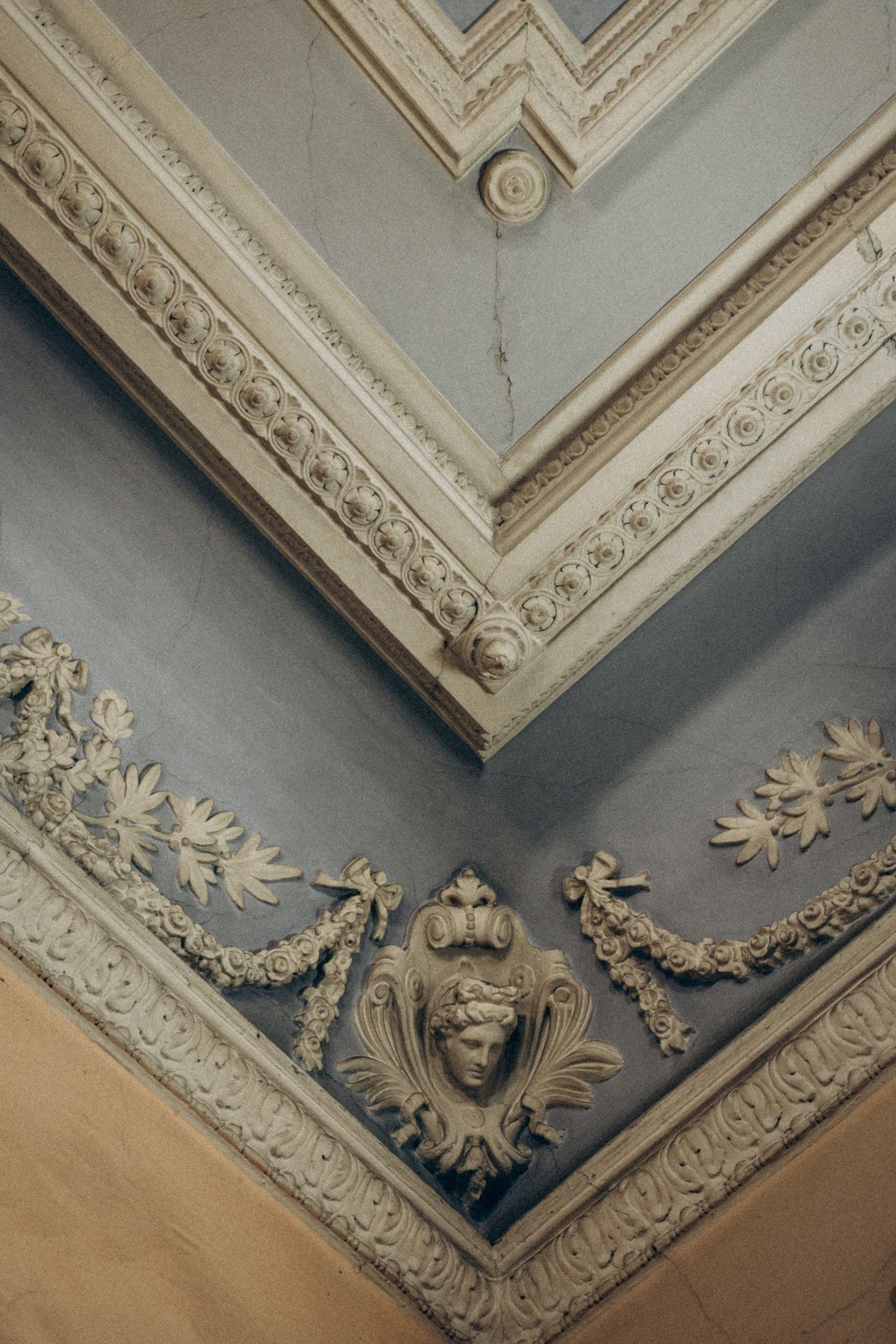
Classical bas relief draws on motifs that have decorated walls for more than two thousand years, above all the acanthus leaf, the hanging garland and the draped human figure. Zavoré sculpts classical bas relief by hand, on site, for homes and interiors in London, Birmingham, Manchester and across the UK, drawing every design to the size of your wall first so you can approve it before carving begins.
The craft and its long history are explained on our bas relief page. Wherever your property is, see Venetian plastering across the UK for the regions our artisans cover.
Relief carving runs through the ancient world. The Parthenon frieze in Athens, carved between 447 and 432 BC, unrolls a procession of riders and figures in low relief, and around 75 metres of it can be seen at the British Museum in London. In Rome the Ara Pacis altar, made between 13 and 9 BC, is wrapped in scrolling acanthus and processions of robed figures.
Britain took up the language with enthusiasm in the eighteenth century. Robert Adam filled houses with fine plaster relief in the 1760s, at Kedleston Hall in Derbyshire and Syon House in west London, and his Great Room at Kenwood in Hampstead dates from 1767 to 1770. From 1775 Josiah Wedgwood made jasperware in Stoke on Trent, with pale relief figures standing out from coloured grounds, a look still copied today.
The acanthus is a Mediterranean plant with deeply cut, curling leaves. Classical designers stylised it into the crown of the Corinthian capital, and from there it spread into friezes, ceiling roses, brackets and scrolling borders. In relief, acanthus gives a wall rhythm and movement, the leaves rolling over one another and catching light on every edge.
On a wall today, acanthus works as a continuous scroll along the top of a room, a vertical panel either side of a doorway, a frame around a mirror or a single sweeping spray on a chimney breast. It suits tall Georgian rooms but also looks striking in a pared back modern space, where one confident piece of ornament carries the whole wall.
Garlands of leaves, flowers and fruit, often looped between rosettes or tied with ribbons, were a favourite of Roman and later Georgian decoration. They soften straight architecture and lead the eye across a wall. Swags can hang beneath a cornice, drape above a doorway or frame a medallion at the centre of a feature wall.
Supporting details add authenticity. Paterae, the small round rosettes, punctuate a run of swags. Urns, ribbons and bows sit at the meeting points. Borders such as the Greek key or egg and dart can edge a panel. Used with restraint, they give a room a sense of order without fuss.
The human figure is the most ambitious subject in relief. Classical figures usually appear in flowing drapery, walking in procession, dancing, or seated with attributes of music, harvest or learning. Winged cherubs, or putti, carry garlands, play instruments or cluster around a central medallion. A single figure panel above a fireplace wall or at the turn of a staircase can feel like a piece of sculpture made for the house.
Figures take more design time than leaves or swags, because faces, hands and the fall of cloth must read well from across the room. That is why we draw them carefully at scale and agree the composition with you before any plaster goes on.
Drawing rooms and dining rooms. Friezes of acanthus or garlands along the upper wall, or a central figure panel, suit formal rooms in Georgian squares, Regency terraces and country houses.
Entrance halls and stairwells. A tall acanthus panel or a procession of figures rising with the stair gives a strong first impression.
Bedrooms. A garland or medallion above the bed works in place of a headboard.
Hotels, restaurants and receptions. Classical relief brings a sense of permanence to a lobby or dining room, and lettering or a crest can be worked into the design.
Relief can sit within a polished plaster or marmorino wall, be painted, tinted or picked out in gilding, or be left white so that low angled light from a window or wall washer does the work. Lighting can be built into the design, with any electrical connections made by a qualified electrician.
Our own artisans sculpt relief across the country, and our London showroom and training centre can be visited by appointment. The bas relief installation page explains the practical steps.
In a listed building, consent is usually required for work that affects its special character, so speak to your local planning authority before you commit.
We can take inspiration from historic relief and interpret it for your wall, adjusting the scale, depth and detail to suit the room. Every piece is sculpted by hand, so it will be a fresh work in the classical spirit rather than an exact cast.
Yes, often very well. A single acanthus spray or figure panel on an otherwise plain wall can look striking in a contemporary room. Keeping the colour simple, usually white or a soft stone shade, helps it feel calm rather than ornate.
The size of the wall, the amount of detail and the finish all affect the price. Figures generally take more time than foliage or garlands. We give a clear price after the survey and once the drawing is agreed.
Yes. It can stay pure white, be painted or tinted, or have edges and highlights picked out in gilding or metallic detail for a richer effect.
To discuss a classical bas relief for your home or business, call +44 7592 929191 or email sales@zavore.co.uk with photos of the wall, rough measurements, the address and any images that inspire you. If the relief will sit within a plaster wall, our sample board shows the colours.
How sculpted plaster logos and brand feature walls are designed and carved in bas relief, from receptions and hotel lobbies to lighting, ...
Bas ReliefHow bas relief with gold leaf and gilded details works, from choosing which edges to gild and the right background colour to lighting, ca...
Bas ReliefHow a hand sculpted bas relief can turn an office reception or brand wall into a lasting statement, from design and logo work to lighting...
Bas ReliefIdeas and practical advice for a bas relief wall in a dining room, from botanical and geometric designs to lighting, finishes and how a h...
Bas ReliefIdeas and practical advice for bas relief birds, animals and nature scenes, from choosing a design and finish to how a hand sculpted comm...
Bas ReliefWhere bas relief works in bathrooms, why it stays on dry walls, and how Zavoré designs, sculpts, finishes and lights a relief wall across...

Providing luxury finishes for the most prestigious addresses in the world
Venetian plaster, limewash, microcement, tadelakt, metallics, sculptural plaster and gold leaf, supplied and installed by our own team, with Venetian plaster taught at our Birmingham studio.
One list, run by the people who make the material. No noise, and nothing we would not want to read ourselves.
We email as the house has something worth saying, never daily. Unsubscribe from any email, or reply STOP to any text. We never pass your details to anyone.