

✦
Where Artistry Begins
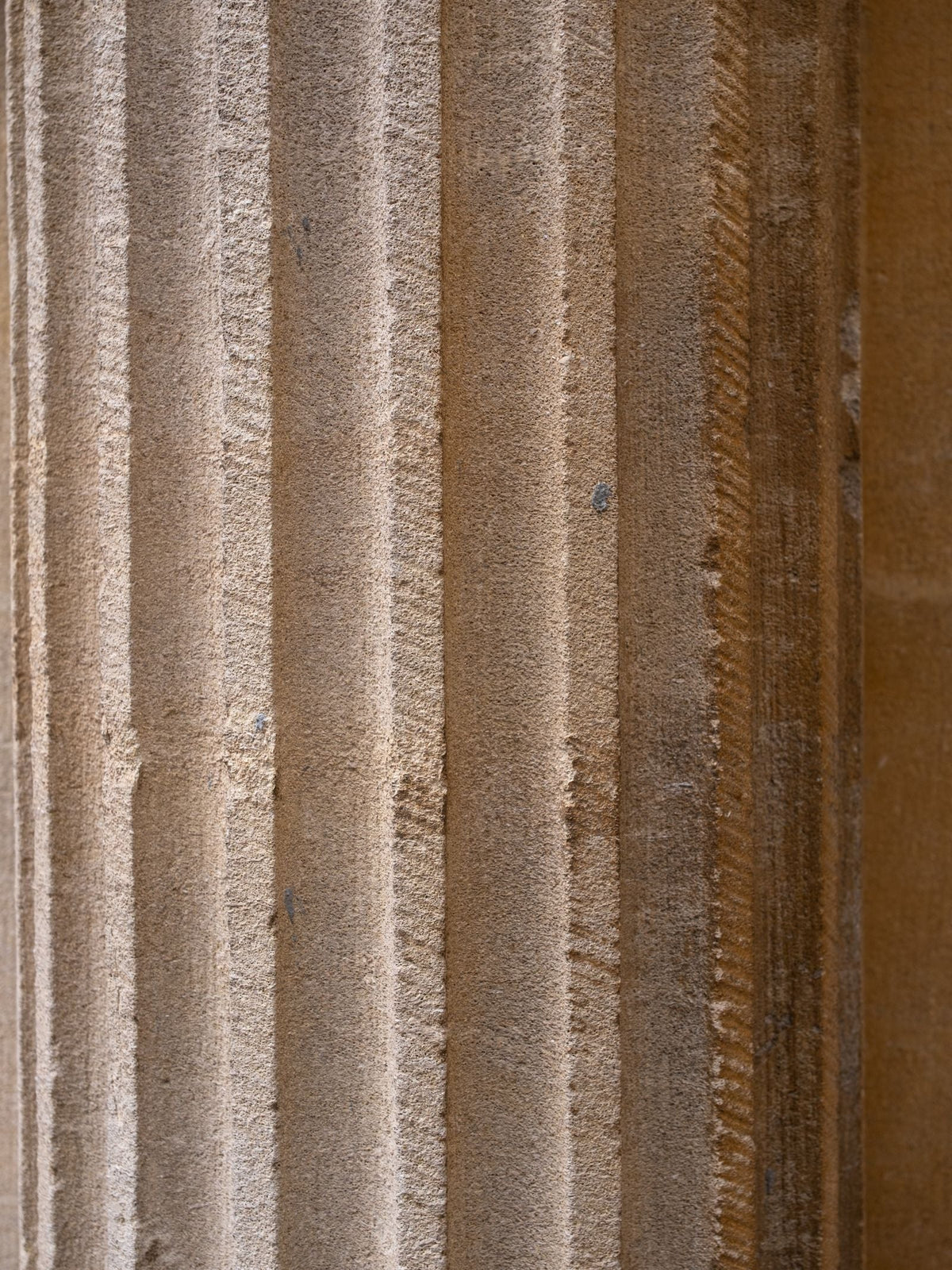
Polished plaster on columns, pillars and curved walls is one of the few finishes that can wrap a rounded surface without a single seam, so a column reads as one piece of polished stone from floor to ceiling. Zavoré applies it by hand to columns, pillars, bowed walls and arches in homes and commercial interiors across London, Birmingham, Manchester and the rest of the UK. Our own artisans trowel and burnish each coat around the curve, after a survey and a sample you approve.
You can read about the finish itself on our polished plaster page. To see where we install, from city centres to rural counties, visit Venetian plastering across the UK.
A column catches light all the way round, so its surface is seen from every angle. Polished plaster, the burnished end of Venetian plaster, is laid in thin lime coats and pressed until it closes into a smooth, marble like skin. On a curve that sheen travels as you walk past, giving a column a sense of depth and weight that paint cannot. It has a marble look but is not marble, so there are no slabs to cut, no joints to line up and far less load on the structure.
It also lets you choose the character. A pale, glassy polish on a pair of hallway columns feels classical. A soft marmorino in a warm grey suits a contemporary open plan space. Travertino or a concrete effect can turn a plain casing round a steel into a feature.
Before any plaster goes on, we find out what the column actually is.
Structural columns and steels are a matter for your builder or engineer. Our role is the finish, and we plan it around what they tell you.
Curved walls appear in many UK homes, from Victorian bay windows and Georgian bowed stair halls to modern extensions with sweeping glass and rounded partitions. Arches between rooms are increasingly popular in new interiors too. Polished plaster follows these shapes naturally. The artisan works the trowel in short, controlled passes so the coat stays even around the bend, and the polish is built up in a way that hides where one pass meets the next.
The base matters even more on a curve. A dent or a flat area on a column shows up as a wobble in the reflection. At the survey we check the radius is consistent, the edges and returns are straight, and the substrate is sound. If the curve needs truing first, we tell you before any price is set.
Columns in busy commercial spaces take knocks from trolleys and luggage. A darker or more textured finish hides wear better, and polished plaster can usually be repaired locally if it is marked.
Round work is slower than flat walls, and the time depends on the number of columns, their size and the drying between coats. We set that at the survey. Our Venetian plaster installation page describes each stage.
We finish columns, pillars and curved walls in London houses and apartments, in Birmingham and Manchester, and across the UK. When comparing teams, ask whether they have experience of round work, how they will prepare the base, and whether they will produce a sample before you commit. In a listed building, consent is generally needed for works that affect its character, so check with your local planning authority first.
Yes, once the casing is built from a suitable board or former and fixed firmly. The joints are reinforced and a matching primer applied, then the plaster is laid in thin coats. The steel itself is never plastered directly.
Usually, because round and shaped work is slower to lay and polish evenly. Height, access and preparation also count. We survey the surfaces and then give you a clear price, so you know where the time goes.
It should not. The coats are worked continuously around the column, and the polish is built so passes blend together. A smooth, true base is what keeps the reflection even and the surface seamless.
They can be the same colour and sheen as nearby walls for a calm, unified look, or a contrasting tone to stand out. We often suggest testing both on a sample board first.
To talk through columns, pillars or curved walls, call +44 7592 929191 or send photos and rough measurements to sales@zavore.co.uk. A sample board helps you choose the colour.
An outline of what limewash training covers about mixing limewash and the risks of slaking lime, and how to ask Zavoré about it.
BasementsA guide to decorative finishes for London basements, covering media rooms, gyms and wine rooms, why waterproofing must come first, and wh...
CheshireAn in depth guide to seamless microcement and tadelakt bathrooms for homes across Cheshire, and how to choose between them.
CheshireA guide to polished plaster and other decorative finishes for the large modern homes of Wilmslow and Alderley Edge, and where they fit in...
CheshireChester and the Cheshire countryside are full of timber framed, Georgian and Victorian buildings. This guide explains why lime finishes s...
Greater ManchesterHow microcement floors work in kitchen extensions across Greater Manchester, from the screed underneath to underfloor heating and everyda...

Providing luxury finishes for the most prestigious addresses in the world
Venetian plaster, limewash, microcement, tadelakt, metallics, sculptural plaster and gold leaf, supplied and installed by our own team, with Venetian plaster taught at our Birmingham studio.
One list, run by the people who make the material. No noise, and nothing we would not want to read ourselves.
We email as the house has something worth saying, never daily. Unsubscribe from any email, or reply STOP to any text. We never pass your details to anyone.