

✦
Where Artistry Begins
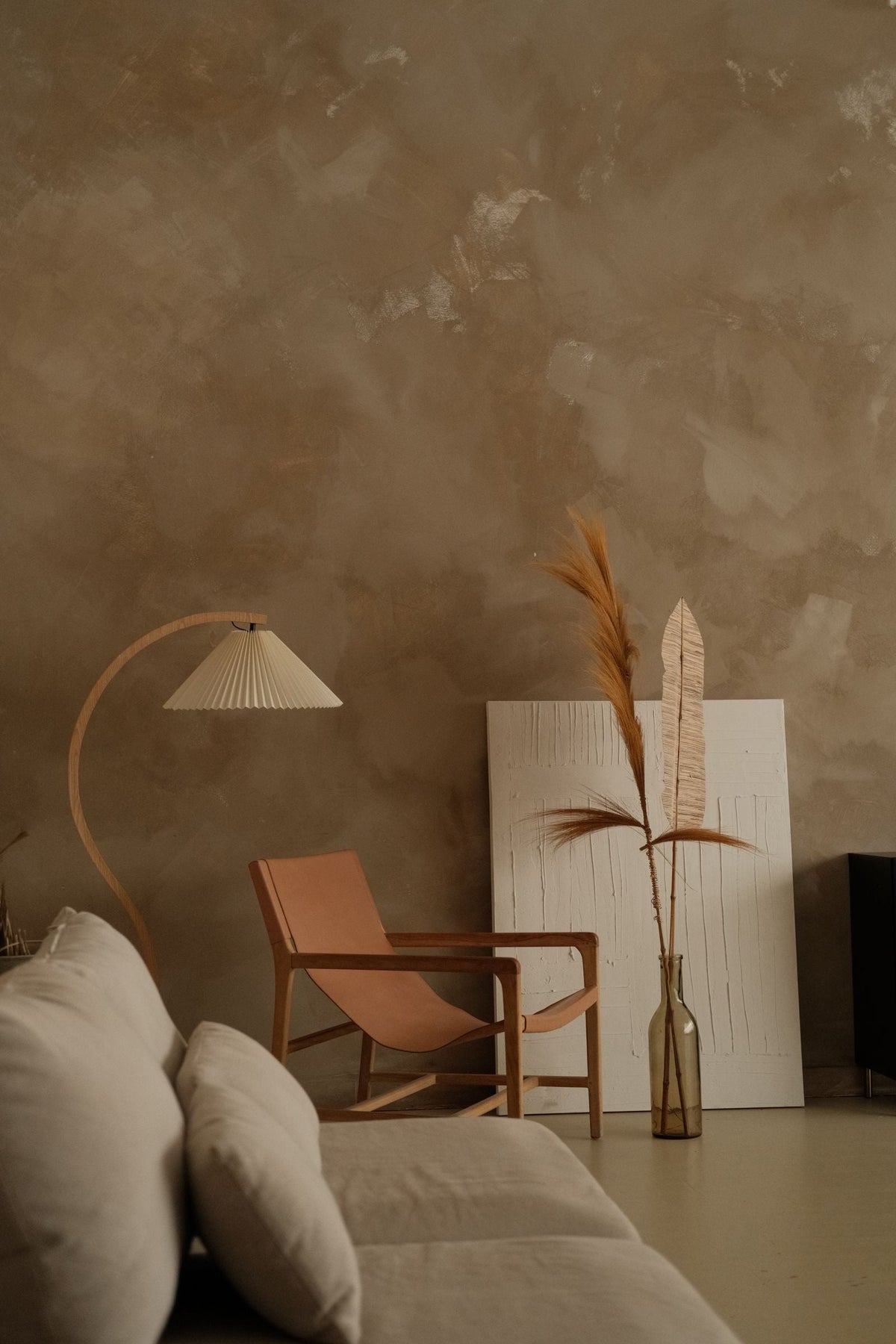
Polished plaster in Reading is installed by Zavoré, a company set up in 2021 that installs, supplies and teaches Venetian plaster and other decorative finishes. Our own artisans lay polished plaster in Reading houses, flats, shops and offices, and every job begins with photos and a survey so the finish is matched to the wall it goes on.
Polished plaster is simply the glossiest end of Venetian plaster, burnished until it carries a soft marble sheen. Our page on polished plaster explains the finish in depth, and our page on Venetian plastering in Reading covers the town and the walls we tend to meet there.
Real Venetian plaster is built from slaked lime and fine marble dust, laid in very thin coats with a steel trowel. Each coat is pressed and compacted, and on the last ones the trowel is worked until the surface tightens and begins to shine. That shine is what people mean by polished plaster. A matt marmorino, a stone textured travertino and a glassy polished wall all belong to the same family; they differ in how the material is laid and how far it is worked.
It is worth saying plainly that it gives a marble look without being marble. The depth comes from layers of tinted lime catching the light at slightly different angles, which is why a good polished wall looks alive rather than painted.
Reading is a town of brick. The Victorian terraces around Newtown, Katesgrove and the Oxford Road often have patterned red and grey brick fronts and solid walls behind old plaster. Caversham and Redlands have bigger Victorian and Edwardian houses with tall rooms, bays and original cornice. Further out, Tilehurst, Earley and Woodley are largely interwar and postwar, and near the station there are newer apartment blocks and converted offices lined in plasterboard.
Lime breathes, so it sits happily on solid masonry where moisture needs a way out. An acrylic product would form a film instead. On a terrace wall we often lean towards marmorino or a gently polished lime finish, while a flat, freshly boarded apartment wall can take a deep, mirror like polish once its joints are dealt with.
Our Venetian plaster installation page sets out the wider process. We do not give timescales in weeks or a price per room in advance, because both depend on what the survey finds.
There is no honest fixed figure. The price depends on how much wall there is, how much preparation it needs, the height of the room, how far it is polished and how many details such as reveals, arches or curved corners are involved. A sound, flat wall in a new flat is a very different starting point from a century old terrace wall with patched plaster. That is why we survey first and then give one clear price for the work agreed.
Polished finishes reveal every dip, so flatness matters more than anything else. Older plaster may need loose areas cut out and made good, or a full skim. Plasterboard needs its joints reinforced and the correct primer before any lime goes on, otherwise the joints can show through. Fresh plaster has to dry fully. Electrics, joinery and other trades should be finished first, and a room kept gently warm dries more evenly than a cold one.
If your Reading house is listed, listed building consent is generally needed for works that affect its character, so speak to your local planning authority first. Many flat leases need the freeholder's permission for alterations, so check yours too.
Hallways and staircases gain a lot, since the light runs along a long wall. Living rooms and dining rooms suit a full room or a single feature wall. Bedrooms tend to look calm in softer, less polished lime. Offices and receptions in the centre and on the business parks often want something durable that can be repaired neatly if knocked. Polished plaster is not for inside a shower; tadelakt or microcement on a waterproofed wall is the right choice there, with Venetian plaster on the drier walls of the room.
For more on the town itself see polished plaster in Reading, and for everywhere else we install see Venetian plastering across the UK. We work in London, Birmingham, Manchester and right across the country.
Yes, in the sense that polished plaster is the highly burnished end of Venetian plaster. The material is lime and marble, and the difference lies in how many coats are laid and how hard the final ones are worked with the trowel to bring up the sheen.
Usually, yes. A lime finish suits solid brick because it lets moisture pass through. We check the old plaster for damp, hollow patches and cracks at the survey, then say what preparation it needs before recommending how far to polish it.
You can pick from 48 house colours or give us any NCS reference. Ordering a sample board lets you see the shade and sheen in your room, under its daylight and lamps, before you commit to the wall.
We do. Courses run at our Birmingham academy and our London and Manchester centres, with a 3 day Beginner Course, a 4 day Advanced Course and 3 day 1 to 1 Training, all materials included. Every course is taught in person.
Planning walls in Reading? Send photos, rough measurements and your postcode to sales@zavore.co.uk or ring +44 7592 929191, and we will talk you through the next step. A sample board is an easy place to start on colour.
How microcement floors work in kitchen extensions across Greater Manchester, from the screed underneath to underfloor heating and everyda...
Buying GuideA product by product guide to the protective finishes in the Zavoré shop and which plaster each one is made for.
CommercialWhat London restaurant, bar and hotel operators should know about decorative plaster. Which finishes stand up to busy service, out of hou...
BirminghamFor people thinking about leaving another job for decorative plastering. What a beginner course at the Zavoré Academy covers, the gap bet...
TadelaktAn in depth guide to tadelakt, the polished Moroccan lime plaster, for bathrooms and wet rooms in Welsh homes, cottages and holiday lets.
DubaiHow polished plaster works on staircases and lift lobbies in Dubai villas, from tall stair walls and handrail fixings to protecting busy ...

Providing luxury finishes for the most prestigious addresses in the world
Venetian plaster, limewash, microcement, tadelakt, metallics, sculptural plaster and gold leaf, supplied and installed by our own team, with Venetian plaster taught at our Birmingham studio.
One list, run by the people who make the material. No noise, and nothing we would not want to read ourselves.
We email as the house has something worth saying, never daily. Unsubscribe from any email, or reply STOP to any text. We never pass your details to anyone.