

✦
Where Artistry Begins
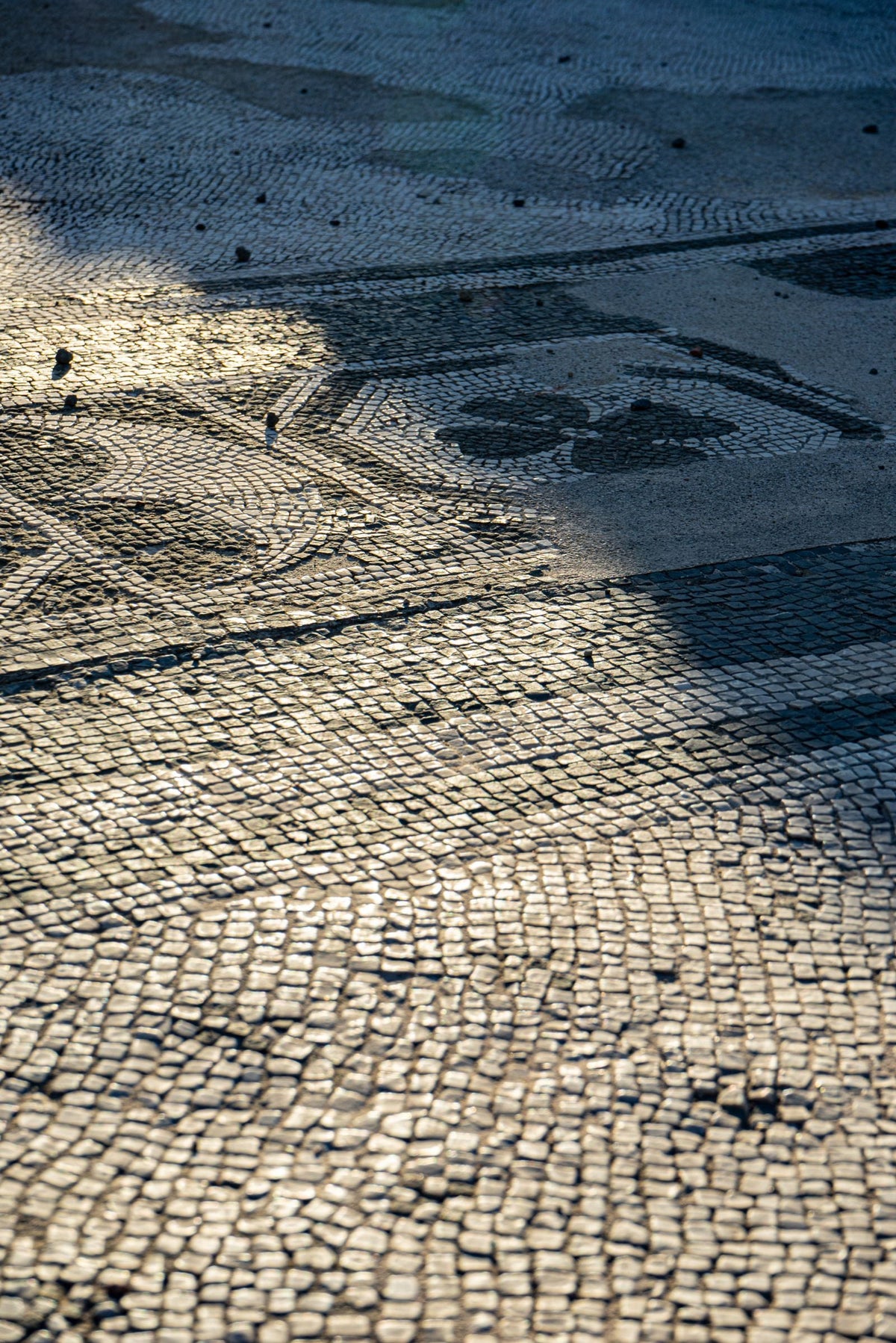
Roman mosaics were made by pressing thousands of small cubes of stone, marble, glass or ceramic, called tesserae, into a bed of lime mortar laid over layers of rubble and concrete. Most floors used even sized tesserae in plain patterns, while the finest picture panels used tiny pieces set as closely as brushstrokes. In Britain you can still see them where they were laid, at Fishbourne and Bignor in Sussex, Lullingstone in Kent and Chedworth in Gloucestershire, and in museums such as the British Museum and the Corinium Museum in Cirencester. This guide explains how they were made, the famous examples worth knowing, and where to see them.
If you want it installed, our own applicators handle mosaic installation from survey to final coat.

Tesserae are the building blocks of a mosaic, small cubes cut from stone, marble, glass, ceramic or another hard material. The Getty Museum notes that when a mosaicist wanted finer effects, the coloured stones were cut very small, and glass was sometimes used to give oranges, yellows, blues and greens that are hard to find in nature.
Exactly how the Romans planned a design is not recorded. Vitruvius describes floor preparation, but the Getty points out that he says nothing about how tesserae were gathered or cut, or how designs were laid out. Mosaicists probably worked from drawings and pattern books, and they had freedom within a commission, so no two Roman mosaics are exactly alike.
Britannica describes two main ways of working.
Vermiculatum was often kept for the emblema, a central picture panel framed by coarser patterned work. Britannica notes that many emblemata were made as portable units, ready to be set into a larger floor, a practice that began around 200 BC.

A Roman mosaic floor was really a layered lime concrete with a decorative face. In his book on architecture, Vitruvius sets out the order. First comes a bedding of stones no smaller than will fill the hand. On top goes a layer of broken stone mixed with lime. Then comes the nucleus, pounded tile mixed with lime, at least six digits thick. Britannica puts it simply, two to three layers of mortar came before the final setting bed that carried the tesserae.
The tesserae were set into that last, finer bed. The layers below did the structural work, giving the decorative face a firm, level base. The same logic still applies to a mosaic floor today. A sound, stable base matters as much as the pattern on top.

Fishbourne, near Chichester, was found in 1960 by contractors digging a trench for a new water main. The late first century palace is the largest Roman residence found in Britain, and its mosaics are preserved in place. They include early black and white geometric floors, among the earliest known in Britain, and the famous Cupid on a Dolphin.
Bignor was discovered in 1811 during ploughing and has welcomed visitors since 1814. Historic England describes its mosaics as some of the finest in the country, shown inside protective cover buildings from the Georgian period. Subjects include Venus, cupids dressed as gladiators, Ganymede, Medusa and the seasons, and one of the longest Roman corridor mosaics.
English Heritage cares for Lullingstone, where two mosaics were laid around the middle of the fourth century. One shows Europa carried off by Jupiter in the form of a bull, with a Latin couplet alluding to Virgil. The other shows Bellerophon on Pegasus killing the Chimaera, framed by roundels of the seasons.
At Chedworth, run by the National Trust, the dining room floor shows cupids representing the seasons, with Winter holding a bare branch and a hare. Most of the villa's mosaics date to the fourth century, and the Trust reports one dated to the fifth century, later than many expected.

Small cubes of stone, marble, ceramic and sometimes glass, set into lime mortar over layers of rubble and concrete.
Tessellatum uses even sized tesserae and was used for most floors. Vermiculatum uses much smaller pieces that follow the outline of a figure, for detailed picture panels.
Fishbourne, Bignor, Lullingstone and Chedworth all show mosaics where they were laid. For objects you can see up close, try the British Museum and the Corinium Museum.
Yes. Zavoré designs bespoke mosaics, including patterns and pictures inspired by Roman floors, and installs them across the UK.
Where to go next. See what we design and install on our mosaics page, read about Victorian mosaic and geometric floor tiles, or browse mosaic bathroom tiles. To talk through a design, contact us, call or WhatsApp 07592 929191, or email sales@zavore.co.uk.
How microcement floors work in kitchen extensions across Greater Manchester, from the screed underneath to underfloor heating and everyda...
Buying GuideA product by product guide to the protective finishes in the Zavoré shop and which plaster each one is made for.
CommercialWhat London restaurant, bar and hotel operators should know about decorative plaster. Which finishes stand up to busy service, out of hou...
BirminghamFor people thinking about leaving another job for decorative plastering. What a beginner course at the Zavoré Academy covers, the gap bet...
TadelaktAn in depth guide to tadelakt, the polished Moroccan lime plaster, for bathrooms and wet rooms in Welsh homes, cottages and holiday lets.
DubaiHow polished plaster works on staircases and lift lobbies in Dubai villas, from tall stair walls and handrail fixings to protecting busy ...

Providing luxury finishes for the most prestigious addresses in the world
Venetian plaster, limewash, microcement, tadelakt, metallics, sculptural plaster and gold leaf, supplied and installed by our own team, with Venetian plaster taught at our Birmingham studio.
One list, run by the people who make the material. No noise, and nothing we would not want to read ourselves.
We email as the house has something worth saying, never daily. Unsubscribe from any email, or reply STOP to any text. We never pass your details to anyone.