

✦
Where Artistry Begins
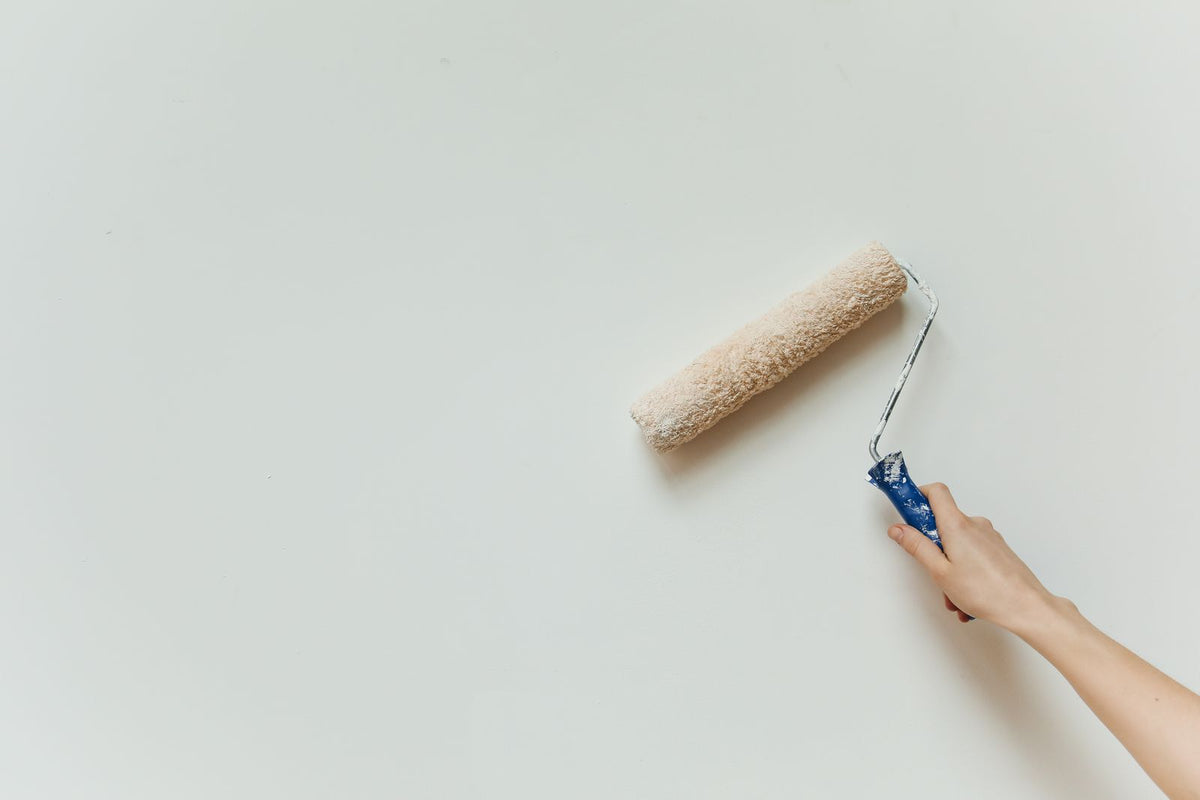
Textured wall paint is emulsion or acrylic with aggregate mixed into it, rolled on and left in a shallow relief. Textured plaster is a mineral material. Lime, marble powder, graded aggregate, laid on with a trowel in coats, so the texture is the body of the wall rather than a pattern printed on top of it. Both give you relief. One is a film a fraction of a millimetre thick, the other is a surface you could sand back. That single difference decides depth, the way light behaves on the wall, and how the wall looks in five years.
We supply and lay plaster rather than paint, so our bias is on the table. What follows is the same comparison we give people who ring the Birmingham workshop asking for textured paint and put the phone down having ordered something else.
Products sold for texture fall into three groups. Roller texture emulsions carry a bulking filler and pick up a stipple from the roller nap. Sand effect and suede effect paints hold fine silica and dry to a grain you can feel with your palm. Heavy textured masonry coatings are thicker again and are generally meant for outside walls.
All three are polymer films, bound with acrylic or vinyl, applied with ordinary decorating kit and dried by evaporation. That makes them fast, cheap and forgiving of a wall that is less than flat. It also caps what they can do: a film cannot cast a shadow it is not thick enough to throw, so the texture reads as a surface pattern rather than as material.
Tubs marketed as “Venetian plaster paint” are a different animal again. See Venetian plaster paint vs real plaster.
Decorative plaster is mineral. Lime binds graded marble, dolomite or silica, and the mix is laid on in coats with a steel or plastic trowel. Aggregate size sets the character almost entirely: a coarse grade reads as stone, a medium grade as weathered render or travertine, a very fine grade as suede or paper.
Because the material has body, the surface holds real relief. Ridges have edges. Hollows have shadows. Cross light from a window or a wall light rakes across it and the wall changes through the day, which is the thing people are actually chasing when they search for texture.
Lime also cures rather than simply drying. It firms in hours and carries on hardening for weeks as it takes up carbon dioxide from the air, which is why a lime wall tends to get tougher with age instead of softer. Acrylic bound decorative plasters behave differently; we set the two side by side in lime vs acrylic Venetian plaster.
| Textured paint | Textured plaster | |
|---|---|---|
| Binder | Acrylic or vinyl polymer | Lime, sometimes with a mineral or acrylic modifier |
| Body | A thin film on the surface | Material with thickness you can trowel and sculpt |
| Depth of texture | Shallow, even, repeating | As deep as the aggregate and the hand allow |
| In side light | Reads as a printed pattern | Reads as stone or fabric; shadows move |
| Applied with | Roller, brush, sometimes a comb | Trowel, spatula, float |
| Skill needed | Competent decorator | Trained applicator |
| Breathability | Low on vinyl grades | High on lime grades |
| Colour | Tinted at the paint counter | Tinted through the body of the material |
| Repair | Patches flash; usually a full recoat | Can be cut in and blended by hand |
| Failure mode | Scuffs, then peels or flakes | Chips; wears thin at edges |
Five of the materials we stock are bought specifically for relief rather than for polish.
Intonachino (£200) is the closest thing we sell to the look people imagine when they say textured paint, and it is an order of magnitude better. A graded lime and marble mix laid thin and floated off, it gives a fine, even, sandy relief with no gloss. It is the honest choice for a whole room rather than a single wall.
Dilavato (£145) is coarser, with a washed, weathered, open surface that looks like old external render brought indoors. It suits bare, rustic schemes and takes limewash or a mineral glaze well.
Stucco Suede (£200) is the soft end. Very fine, faintly mottled, matt as brushed fabric. There is a metallic version (£175) if you want the same grain with a low shimmer.
Comet (£200) gives a directional, drifting texture with movement in it, closer to a fabric weave than to sand.
Travertino (£200) is the one with holes in it: the pitted, banded look of travertine stone, built up and knocked back so the voids stay open. There is more on it on the Travertino page.
Every one of these is tinted to your colour in the tub before it leaves us, so the colour is in the material and a chip does not show white. Our guide to textures and finishes runs through the rest of the range.
Textured paint fails the way paint fails. It scuffs in a hallway, it marks where furniture touches it, and once the film is broken you can see the substrate. Because the texture is a film, a patch almost always shows. The new stipple never quite matches the old one, and the sheen differs. The usual answer is to recoat the whole wall.
Textured plaster fails differently. A knock takes a chip out of the material, and because the colour runs through, the chip is far less obvious. Lime keeps hardening after it is laid, so it gets more knock resistant rather than less. Repairs are possible: a trained hand can cut out, refill and feather new material into the old. That takes skill, but it is achievable, which is not true of a rolled texture.
One honest caveat: deep texture collects dust. In a kitchen it is worth going finer, and in a bathroom worth thinking about sealing.
Textured paint is cheaper to buy and cheaper to apply, and for a rented flat or a quick refresh it is the sensible answer. We are not going to pretend otherwise.
Plaster costs more per tub and a great deal more in labour, because it is laid by someone trained to lay it. What you are buying is depth, a wall that reads as material rather than coating, and a surface that can be repaired and will outlast several repaints. Quantities depend on the grade and how heavily it is laid, so we keep the numbers in the coverage guide.
You can, and it is a waste. Paint fills the fine relief and kills the depth you paid for, and it seals a breathable lime surface under a plastic film. If you want a different texture, the plaster can usually be keyed and replastered instead. We cover the reverse question in can you paint over Venetian plaster.
No. Artex is a thick stippled or patterned coating, usually applied to ceilings and often combed into a repeating shape. Decorative lime plaster is a mineral finish laid flat with a trowel and the texture comes from graded aggregate, not from a comb. The two do not look alike in daylight.
Partly, and less than you hope. Relief disguises minor undulation and small imperfections in the background. It will not hide a hollow, a proud joint or a crack that is still moving. The background has to be sound and reasonably flat first, whichever route you take.
Intonachino and Dilavato are the most forgiving in the range, and people with genuine trowel experience do get good results. If you want to learn properly, our three day beginner course in Birmingham is £750 and covers surface preparation, base coats and textures. Everything is in the course write up.
Where to go next: if you know the look you want, order a sample box of six boards (£35) and see the texture in the room before you commit, or browse the textured grades in the shop. If you would rather we laid it, our own applicators work out of Birmingham and across the UK. Details on the installation page, or ring 07592 929191.
How microcement floors work in kitchen extensions across Greater Manchester, from the screed underneath to underfloor heating and everyda...
Buying GuideA product by product guide to the protective finishes in the Zavoré shop and which plaster each one is made for.
CommercialWhat London restaurant, bar and hotel operators should know about decorative plaster. Which finishes stand up to busy service, out of hou...
BirminghamFor people thinking about leaving another job for decorative plastering. What a beginner course at the Zavoré Academy covers, the gap bet...
TadelaktAn in depth guide to tadelakt, the polished Moroccan lime plaster, for bathrooms and wet rooms in Welsh homes, cottages and holiday lets.
DubaiHow polished plaster works on staircases and lift lobbies in Dubai villas, from tall stair walls and handrail fixings to protecting busy ...

Providing luxury finishes for the most prestigious addresses in the world
Venetian plaster, limewash, microcement, tadelakt, metallics, sculptural plaster and gold leaf, supplied and installed by our own team, with Venetian plaster taught at our Birmingham studio.
One list, run by the people who make the material. No noise, and nothing we would not want to read ourselves.
We email as the house has something worth saying, never daily. Unsubscribe from any email, or reply STOP to any text. We never pass your details to anyone.