

✦
Where Artistry Begins
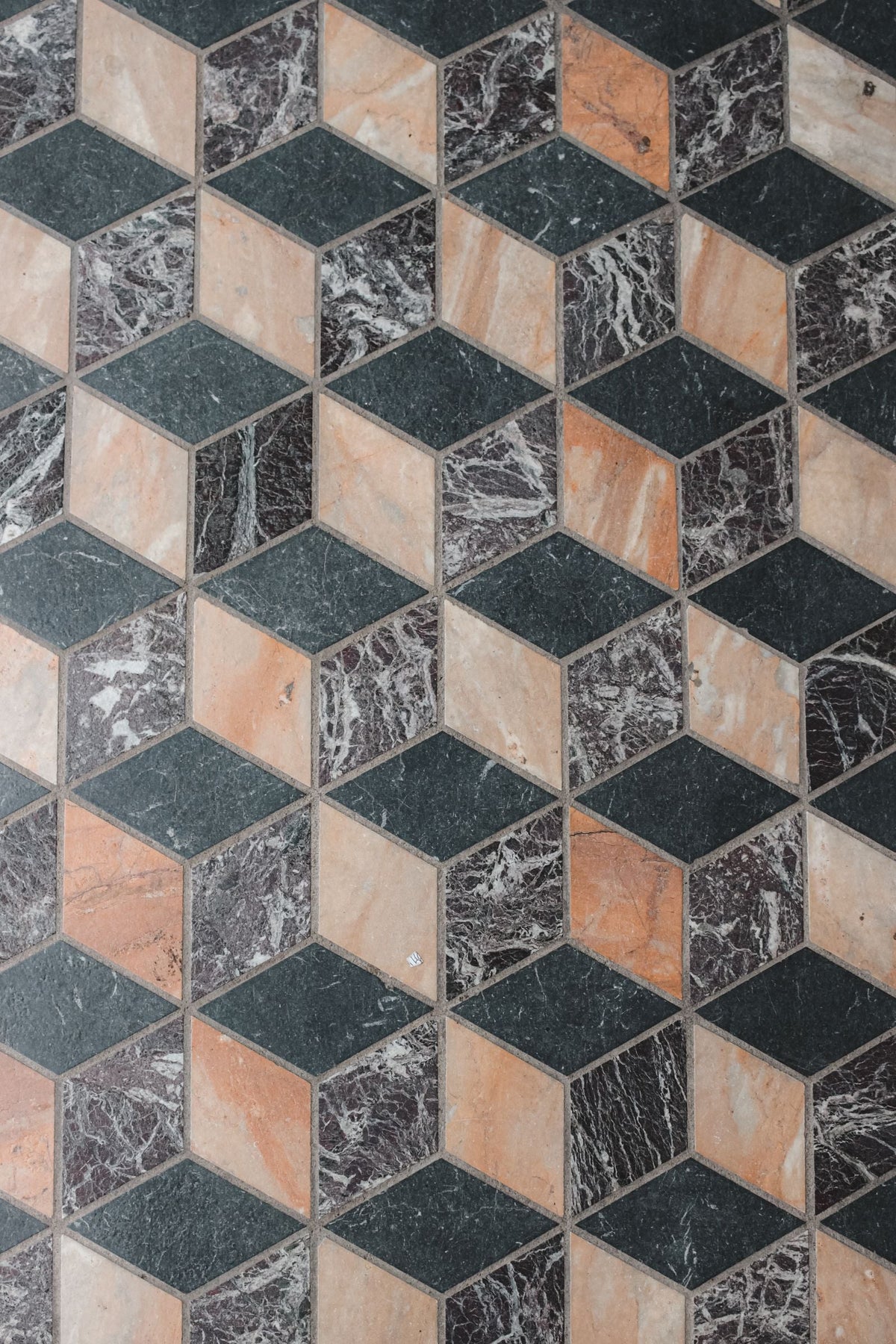
Venetian marble plaster is lime plaster with crushed marble in it, and the marble is what makes it polish. The lime is the binder; the marble dust is the aggregate that gives the coat its body, its hardness and, once it is compressed under a steel trowel, its stone like shine. The size of that marble decides the finish: fine dust burnishes to a glassy polished plaster, coarser grades leave the open, sandy look of marmorino. This piece explains why the marble is there, what its grade changes, and how real marble lime plaster differs from acrylic imitations. For the finish itself, see our Venetian plaster page.
Venetian plaster is what Zavoré supplies, installs and teaches, and our own team provides Venetian plaster installation across the UK.
A traditional Venetian plaster has two main ingredients: slaked lime, which is the binder, and marble, which is the aggregate. The two are chemical relatives. Lime is made by burning limestone; once it is laid on a wall it takes carbon dioxide from the air and slowly turns back into calcium carbonate. Marble is calcium carbonate already. So as the coat cures, binder and aggregate end up as much the same mineral. That is why a well laid lime plaster reads as stone rather than as a coating on top of a wall.
The marble does three jobs:
We explain the wider background, including where the craft comes from, in what Venetian plaster is. The point here is narrower: take the marble out and you do not have a Venetian plaster at all, just a lime wash or a lime putty.
Marble in plaster is sold by grain size, and grain size is the single biggest thing that decides how a finish looks. The finer the marble, the tighter the surface can be closed and the higher it will polish. The coarser the marble, the more texture stays in the wall.
| Marble grade | What the surface does | Typical finish |
|---|---|---|
| Very fine dust | Closes completely under the trowel and burnishes to a deep, reflective shine | Polished plaster, stucco veneziano |
| Fine to medium | Closes well but keeps a slight softness and movement | Satin polished finishes, soft cloudy effects |
| Medium to coarse | Leaves small open pores and grain the trowel skims over rather than flattens | Marmorino, from fine to rustic |
| Coarse and mixed grades | Holds a visible stone texture and strong variation in light | Textured marmorino, stone and travertine style finishes |
This is why the same plaster is often made in several grains. Our Veneziano Plaster (£200) comes in Fine, Medio and Grosso grains and a Botticino stone finish. Fine is the one for a high polish; Medio and Grosso leave more of the stone in the wall.
Coarser grades are not a lesser version of polished plaster. They are a different look, and in many rooms the better one. Open marmorino hides minor unevenness in a wall, reads calmer in daylight and does not show every fingerprint. Our marmorino guide covers that finish in detail, and our marmorino page shows the range.
Grades are also used in layers. A coarser coat underneath builds body and gives the next coat something to key into; finer coats on top are what get polished. A system that goes from coarse to fine is normal, and it is one reason a real polished plaster has depth rather than looking like a single flat film.
Plenty of products sold as Venetian plaster are not lime at all. They use an acrylic resin as the binder, sometimes with marble or calcite filler, sometimes with very little. They can be good products for the right job, but they behave differently and they look different up close.
| Marble lime plaster | Acrylic imitation | |
|---|---|---|
| Binder | Slaked lime, which cures back to stone | Acrylic resin, which dries to a plastic film |
| How it sets | Dries quickly, then hardens slowly as it carbonates | Dries as the water leaves the resin |
| Breathability | Lets moisture vapour pass through | Much less vapour open |
| Look up close | Depth and variation; reads as stone under low side light | Can look flatter or slightly synthetic under low side light |
| Flexibility | Rigid; needs a sound, stable background | More forgiving of slight movement |
| Colour | Needs lime fast pigments and cures lighter than it looks wet | Wider pigment choice and more predictable wet to dry shift |
An acrylic polished plaster is taught on our Advanced course because it has real uses, such as backgrounds that move slightly or finishes that need a particular colour. But if you asked for Venetian marble plaster, you almost certainly meant the lime and marble version.
Read the product data sheet. A lime plaster will name lime or slaked lime as its binder and will carry the usual warnings about alkalinity, because wet lime is caustic. An acrylic one will name a resin or polymer binder. If the description only says “marble effect” and never names the binder, ask.
Loose marble powder has its uses. Our Marble Powder (£14) comes in Fine and Medium grades and adds body and texture to a decorative plaster. Plasterers use it to stiffen a mix, to build a base coat with more substance, or to push a finish towards a slightly more textured look.
Two cautions. First, adding marble changes the balance of binder to aggregate, so too much gives a weak, dusty coat that will not polish. Second, whatever you add to one tub you must add in the same amount to every tub on that wall, or the finish will change where the tubs change. Try it on a test board before it goes near a wall.
If you want to paint veins into plaster yourself, read how to learn marble vein work in plaster.
Partly. Traditional Venetian plaster is slaked lime mixed with crushed marble. The lime is the binder and the marble is the aggregate. As the lime cures it turns back into calcium carbonate, the same mineral as the marble, which is why the finished wall reads as stone. Some products sold under the name use an acrylic binder instead of lime.
Mainly the grade of marble. Polished plaster uses very fine marble dust that closes completely under the trowel and burnishes to a shine. Marmorino uses a coarser grade, so the surface keeps small pores and grain and has a softer, more stone like look. Both are lime and marble; the aggregate size is what separates them.
Yes, in moderation. Marble powder adds body and texture to a decorative lime plaster and is often used to stiffen a base coat. Too much weakens the coat and stops it polishing. Add the same amount to every tub for one wall, and always try the mix on a test board before using it on the wall.
Not worse, but different. Lime and marble plaster breathes, cures to stone and has more depth up close. Acrylic plaster is more flexible and has more predictable colour, which suits some backgrounds and briefs. If you want the traditional material and look, choose lime. If the wall moves slightly, acrylic can be the more sensible choice.
Where to go next: see the finish itself on our polished plaster page, browse the full range in the shop, or have it laid by our own applicators through installation.
How microcement floors work in kitchen extensions across Greater Manchester, from the screed underneath to underfloor heating and everyda...
Buying GuideA product by product guide to the protective finishes in the Zavoré shop and which plaster each one is made for.
CommercialWhat London restaurant, bar and hotel operators should know about decorative plaster. Which finishes stand up to busy service, out of hou...
BirminghamFor people thinking about leaving another job for decorative plastering. What a beginner course at the Zavoré Academy covers, the gap bet...
TadelaktAn in depth guide to tadelakt, the polished Moroccan lime plaster, for bathrooms and wet rooms in Welsh homes, cottages and holiday lets.
DubaiHow polished plaster works on staircases and lift lobbies in Dubai villas, from tall stair walls and handrail fixings to protecting busy ...

Providing luxury finishes for the most prestigious addresses in the world
Venetian plaster, limewash, microcement, tadelakt, metallics, sculptural plaster and gold leaf, supplied and installed by our own team, with Venetian plaster taught at our Birmingham studio.
One list, run by the people who make the material. No noise, and nothing we would not want to read ourselves.
We email as the house has something worth saying, never daily. Unsubscribe from any email, or reply STOP to any text. We never pass your details to anyone.