

✦
Where Artistry Begins
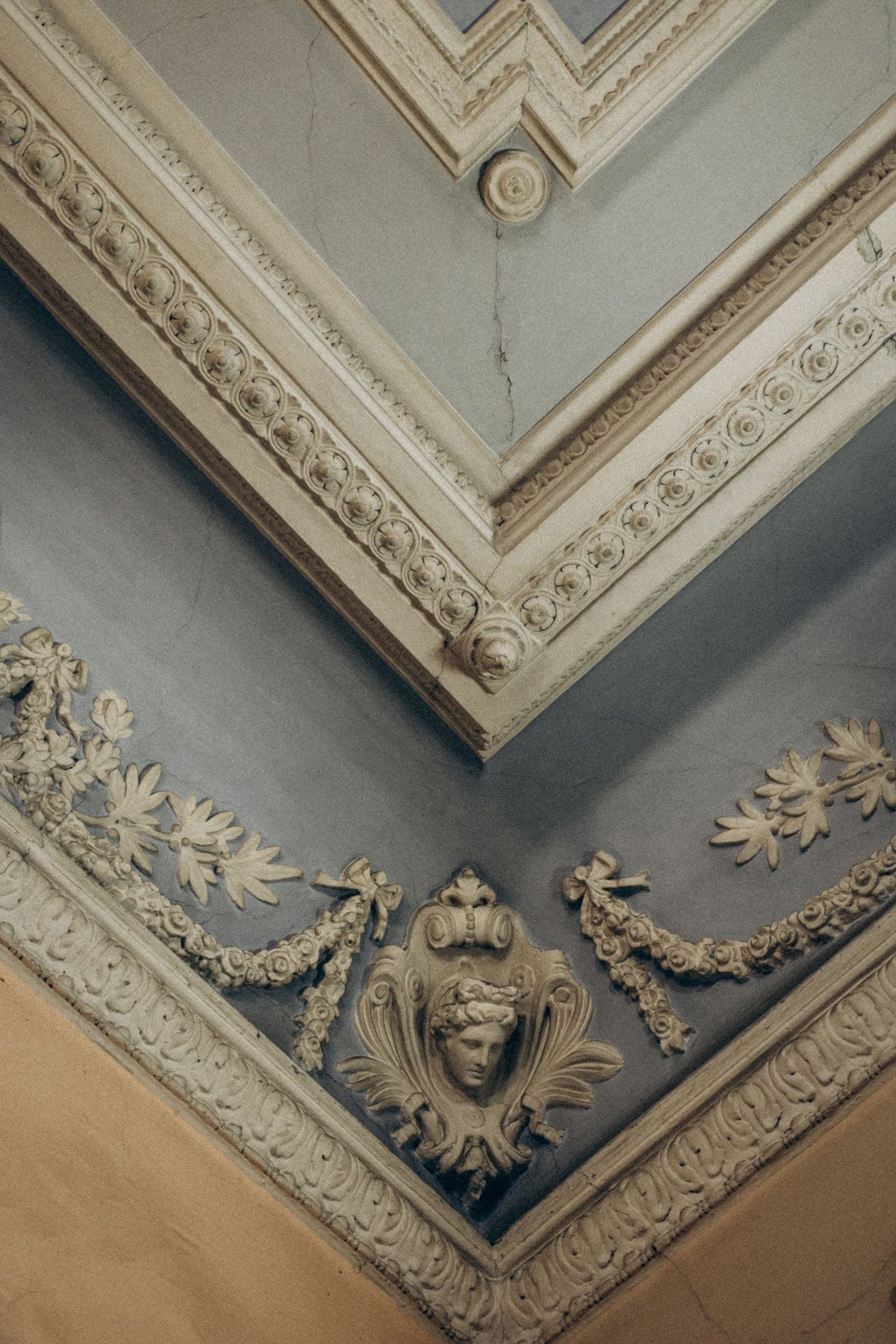
A Venetian plaster ceiling works well, and lime finishes suit ceilings better than most people expect: they are thin, they breathe, and a matt or soft sheen lime surface spreads light evenly across a room. The catch is the work itself. Trowelling overhead is slower and harder than trowelling a wall, and a ceiling is lit from the side, which shows every ridge. Most ceilings we do are marmorino or a low sheen polished plaster, not a high gloss finish. This piece covers why, and what to check before you commit.
Zavoré lays this for you too. Our own team provides Venetian plaster installation across the UK.
Lime based decorative plaster is applied in thin coats, so it adds very little weight overhead. It is vapour open, meaning moisture can pass through it rather than being trapped behind a film, which matters in older houses where the ceiling is part of how the building dries out. And because the colour sits in the material rather than on top of it, there is no paint film to flake or yellow over the years.
There is also the look. A ceiling in a lime finish has a quiet depth that flat emulsion does not. It is rarely the first thing a visitor notices, but it changes how the whole room reads, especially where the walls are plain.
A wall lets you stand square, see the whole panel and move the trowel with your body. A ceiling does not. You work with your arms above your head and your neck bent back, from a platform or a hop up, and you can only see a small patch at a time. Fatigue changes the stroke, and a changed stroke shows in the finished surface.
Timing is the other problem. Every Venetian finish depends on working wet edges and burnishing at the right moment. On a ceiling you cannot step back and read the whole surface, so it is easy to lose track of which area is ready. On larger ceilings we plan the sequence before the first coat goes on and usually put two applicators on the job so a wet edge is never left waiting.
For these reasons a ceiling is not where we suggest anyone learns. If you are doing your own walls, do the walls first and judge your hand before looking up.
A ceiling is almost always lit at a low angle. Daylight comes in sideways through windows; downlighters and wall lights throw light across the surface rather than straight at it. This grazing light exaggerates every ridge, trowel mark and change in sheen.
That has a direct effect on which finish to choose. A high gloss polished plaster turns the ceiling into a weak mirror, and any unevenness in the ceiling behind it shows as a ripple. A matt or soft sheen finish diffuses the light instead, so small imperfections disappear into the texture. The flatter the ceiling and the more even the lighting, the more sheen you can get away with.
| Finish | On a ceiling | Best where |
|---|---|---|
| Marmorino | Our usual choice. Matt to soft sheen, forgiving of side light, a fine mineral texture. | Period rooms, bedrooms, living rooms, older ceilings with slight undulation |
| Polished plaster (low sheen) | Works well burnished to a soft sheen rather than full gloss. | Flat modern ceilings, even lighting |
| Polished plaster (high gloss) | Possible, but shows every flaw in the ceiling and every change in the stroke. | Small, very flat ceilings where reflection is the point |
| Limewash | Soft, chalky and breathable. Quick to apply compared with trowelled finishes. | Old houses, rustic rooms, a subtle wash of colour |
Metallic finishes and strong textures such as artificial rock rarely belong overhead. They draw the eye upward and make a room feel lower.
Where a ceiling meets a cornice, the plaster needs a clean place to stop. We call this a stop line: a crisp edge, usually masked with tape, where the decorative finish ends and the cornice begins. A good stop line is straight to the eye, even where the cornice itself is not quite true.
We do not trowel Venetian plaster over enriched or run cornices. The finish would clog the detail, and the two surfaces are better read as separate things. The cornice is usually painted or limewashed to suit, and the ceiling finish stops cleanly at its edge. Ceiling roses are treated the same way: we work up to them, not over them.
Where there is no cornice, the question is whether the ceiling colour stops at the angle or runs a short way down the wall. Stopping at the angle is cleaner. If the walls are in the same finish, we sometimes run the ceiling and walls as one surface, which makes a small room feel larger.
Old ceilings move. Floors above flex, timbers shrink and swell with the seasons, and fine cracks come and go. A decorative finish does not stop that movement, and any finish applied over an active crack will eventually show it.
Before we quote, we look for three things: whether the ceiling is sound and firmly fixed, whether existing cracks are still moving, and whether the surface is flat enough for the finish chosen. If the ceiling needs repair, that happens first and is a separate job from the decorative work. We only start once the surface is stable and primed.
Lime finishes cope with small, slow movement better than rigid coatings, and marmorino in particular can take a hairline without looking damaged. But a crack that runs across the ceiling because a joist is moving will come back through anything. We explain the mechanics in why marmorino cracks.
A ceiling follows the same broad sequence as a wall: protect the room, prepare and prime the surface, apply the base and finishing coats, then burnish or leave matt, and protect where the finish calls for it. The difference is pace and access. Expect a ceiling to take longer per square metre than a wall of the same size, and expect the room to be out of use while the platform is up. Our installation process guide goes through each stage, and our installation team can look at a ceiling and tell you honestly whether it suits the finish you have in mind.
Yes. Lime based Venetian plasters are applied in thin coats, so they add little weight, and they bond well to a sound, primed ceiling. The work is slower than on walls and needs a good platform. We usually recommend marmorino or a low sheen polished plaster, because high gloss shows every flaw once light crosses the ceiling.
At full gloss it often is. Side light from windows and downlighters rakes across a ceiling and turns a glossy finish into a mirror for every ripple underneath. Burnished to a soft sheen, polished plaster looks very good overhead. The flatter the ceiling and the more even the lighting, the more sheen it can carry.
No. A decorative finish is not a repair. If a crack is still moving, it will come back through any finish laid over it. The ceiling has to be sound and stable first. Lime finishes tolerate small seasonal movement better than rigid coatings, and a fine hairline in marmorino often reads as part of the texture.
It can. Running the same finish and colour across walls and ceiling makes a room feel enclosed and calm, and a small room larger. A slightly lighter tone overhead keeps the ceiling from feeling low. If the walls are polished plaster, a matt marmorino ceiling in a related colour is a good pairing.
Where to go next: look at marmorino and polished plaster side by side, then talk to our installation team about the ceiling you have. If it suits a lime finish, we will say so. If it needs work first, we will say that too.
How microcement floors work in kitchen extensions across Greater Manchester, from the screed underneath to underfloor heating and everyda...
Buying GuideA product by product guide to the protective finishes in the Zavoré shop and which plaster each one is made for.
CommercialWhat London restaurant, bar and hotel operators should know about decorative plaster. Which finishes stand up to busy service, out of hou...
BirminghamFor people thinking about leaving another job for decorative plastering. What a beginner course at the Zavoré Academy covers, the gap bet...
TadelaktAn in depth guide to tadelakt, the polished Moroccan lime plaster, for bathrooms and wet rooms in Welsh homes, cottages and holiday lets.
DubaiHow polished plaster works on staircases and lift lobbies in Dubai villas, from tall stair walls and handrail fixings to protecting busy ...

Providing luxury finishes for the most prestigious addresses in the world
Venetian plaster, limewash, microcement, tadelakt, metallics, sculptural plaster and gold leaf, supplied and installed by our own team, with Venetian plaster taught at our Birmingham studio.
One list, run by the people who make the material. No noise, and nothing we would not want to read ourselves.
We email as the house has something worth saying, never daily. Unsubscribe from any email, or reply STOP to any text. We never pass your details to anyone.