

✦
Where Artistry Begins
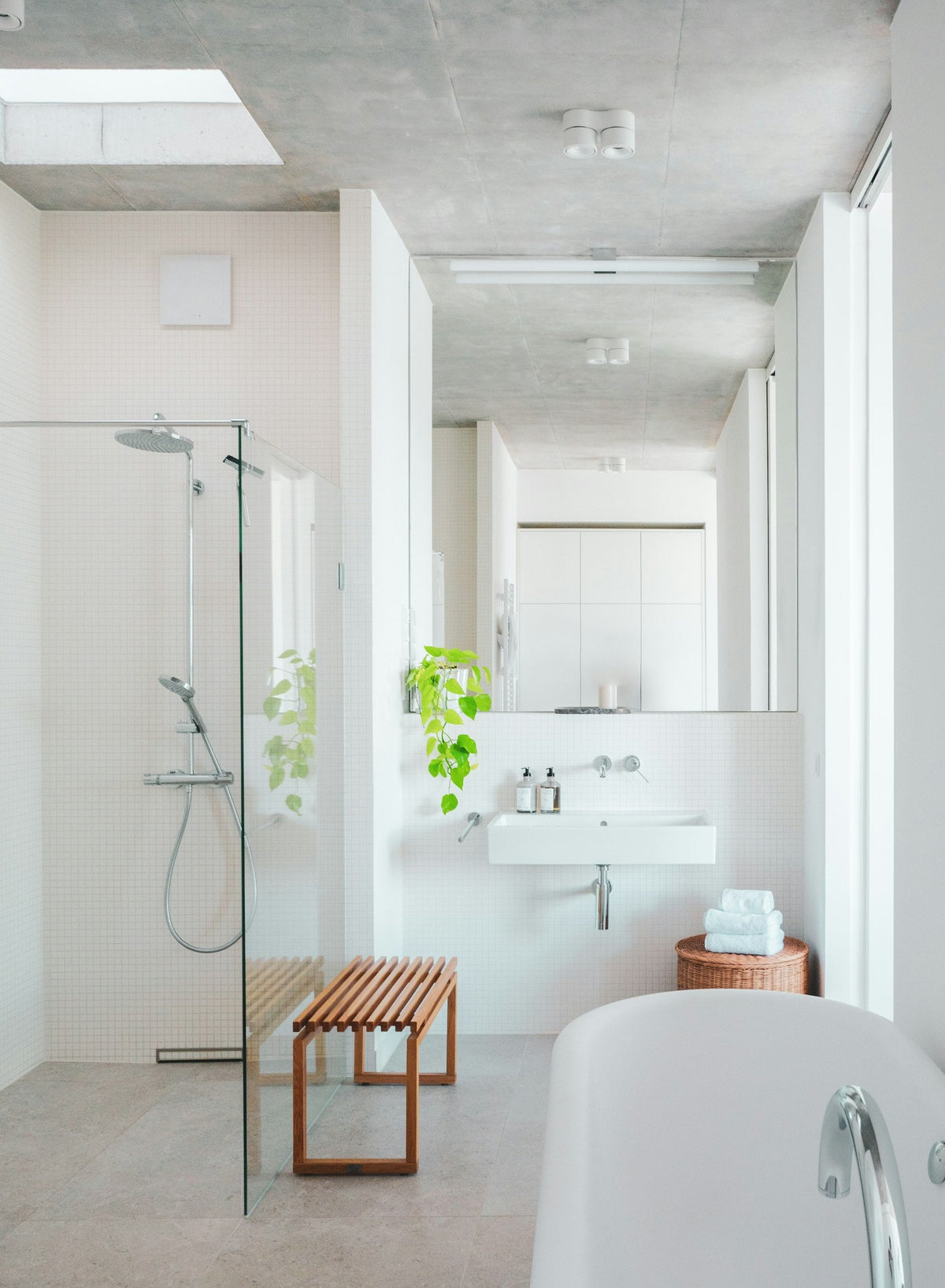
A microcement bathroom is a bathroom with no tiles and no grout: one continuous, seamless surface across the floor, the walls and often the shower tray itself. Microcement, also written micro cement, is a thin cement and polymer coating, applied by trowel a few millimetres thick, that bonds to almost any sound substrate including existing tiles. It is not waterproof on its own. The sealer on top does that job, which is why the quality of the sealing matters more than anything else in a micro cement bathroom. This guide covers going over tiles, floors, showers and baths, cost relative to tiling, maintenance, when Tadelakt is the better choice, and hiring someone who will get it right.
Would you rather have it done for you? Our own applicators provide microcement installation across the UK.
Microcement is a blend of fine cement, polymer resins, aggregates and pigment. It goes on in two or three thin coats over a primer and a mesh, sanded between coats, and is finished with a sealer system, usually a two part polyurethane. The build up is a few millimetres, so it clears door thresholds and sanitaryware.
The look is a soft, cloudy, hand finished surface with subtle movement. People searching for a concrete bathroom or a micro concrete bathroom usually mean this: it is often compared to polished concrete, but it is warmer underfoot, far thinner, and can be tinted to almost any colour. Microcement bathroom colours run from chalk white through greige and putty to charcoal, and mid tones hide water marks best. We cover the broader comparison in microcement versus tiles.
Three reasons make microcement for bathroom work such a good fit. First, no grout lines. Grout is where bathrooms go wrong: it stains, it harbours mould, and it is the part you end up scrubbing. Second, it wraps. Microcement goes over floors, walls, shower trays, bath panels and vanity tops, so a small bathroom reads as one calm space. Third, it goes over what is there, which means less demolition, less dust and a shorter programme.
This is the question that matters, and the honest answer is: the microcement itself is water resistant, and the sealer makes the system waterproof. An unsealed surface will absorb water, stain and eventually break down. A properly sealed one, with the right number of sealer coats and the right cure time before use, will take a daily shower for years.
So when you are comparing installers, ask about the sealer, not the cement. How many coats? Which system? How long before the shower can be used? A good installer will have firm answers.
Two more points. Wet areas still need tanking underneath: microcement is the finish, not the membrane. And junctions, where floor meets wall or tray meets screen, need proper detailing. Most failures we see are at a junction or a rushed sealer.
Yes, and it is one of the best uses of the material. Existing tiles are cleaned, degreased and keyed, an adhesion primer goes on, the grout lines are filled, and the microcement is built up over the top. You keep the tanking and drainage, avoid a skip of rubble, and the bathroom is out of action for days rather than weeks.
The conditions: the tiles must be sound and well bonded. Hollow or loose tiles come off and the void is filled first. Deep grout joints need an extra fill coat or they will ghost through.
Bathroom floors are where microcement really earns its place. It is warm underfoot, works over underfloor heating, and a lightly textured sealer gives grip when wet. Ask for anti slip in the shower and a smoother surface on the main floor.
A microcement shower tray can be formed over a preformed wet room tray or a screeded fall to a linear drain. The finish runs straight from the bathroom floor into the shower with no step and no lip. The fall to the drain has to be right before any microcement goes down; the coating is too thin to correct it afterwards. A microcement bathtub is possible too, over a built in bath surround or a boxed in panel, and is treated exactly like a shower: tanked, sealed, detailed at every junction.
Microcement walls are the easiest part. Over plasterboard, cement board or existing tiles the material behaves well, and outside the shower stream the sealer has an easy life. Inside the shower, the same rules apply as the floor: full sealer system, detailed corners and a silicone bead where the microcement meets glass or trays.
We will not put numbers on it, because every bathroom is different and prices move. What we can say is where microcement sits on the scale. Against budget ceramic tiles fitted by a general tiler, it is more expensive: it is a skilled, multi day, multi coat process. Against large format porcelain, natural stone or a decent wet room tile installation with its tanking, cutting and grouting, it is usually comparable and sometimes cheaper, especially over existing tiles where it saves the strip out. The saving people miss is time: a retile runs a week or two, a microcement overlay is usually days.
Day to day, microcement is easier than tiles. Warm water and a neutral, pH balanced cleaner. No bleach, no acidic limescale removers, no abrasive pads: these attack the sealer, and the sealer is the whole point. Use a squeegee on shower walls in a hard water area. Scratches and chips are rare and can be spot repaired, though they will show slightly, as in any hand finished surface.
Microcement is a modern material with a resin sealer. Tadelakt is a lime plaster, polished with a stone and sealed with olive soap, used in Moroccan hammams for centuries. It is water repellent through the soap reaction rather than a coating, it is breathable, and it has a soft, hand polished depth that microcement cannot copy.
Choose Tadelakt for a period house, a lime finish that breathes, a soft organic look rather than concrete flat, or when a polyurethane sealer bothers you. Choose microcement for a floor that takes hard daily use, for going over tiles, or for the crispest seamless look. We go deeper in Tadelakt bathrooms.
There is a third option: Pastellone, a traditional Italian lime floor plaster that gives a continuous surface across floors and walls. It suits bathroom walls and floors outside the wet zone, and pairs well with Tadelakt inside the shower.
Microcement is unforgiving of shortcuts, which is why we steer homeowners away from a microcement kit for a wet room; a kit is fine for a practice board, not a shower. Ask an installer which system, how many coats, how it is sealed, what the cure time is, what happens at the junctions, and whether you can see a bathroom they did more than a year ago. Look for someone who talks about substrate preparation and tanking before they talk about colour.
Our installation team does microcement and Tadelakt bathrooms across the UK from Birmingham. To learn the wider family of seamless finishes, start at the Academy.
For the floor of the shower itself, read about microcement shower trays and falls.
The cement itself is water resistant; the sealer system on top makes it waterproof. A properly sealed and cured surface takes a daily shower for years. Wet areas still need tanking underneath, as they would with tiles.
Often, once you count tanking, cutting and grouting on a porcelain, stone or wet room tile job, and especially over existing tiles where it saves the strip out. Dearer than budget ceramics fitted by a general tiler. Not cheap, but rarely the expensive option people assume.
Yes. Sound, well bonded tiles are cleaned, keyed and primed, the grout lines are filled, and the coats go over the top. Loose or hollow tiles must come off first.
With the right substrate and sealer, well beyond a decade of daily use before the sealer needs refreshing, and the refresh is a light job rather than a replacement. It is the same story as tiles: the surface outlives the fashion.
Yes, if you change your mind later. The sealed surface is keyed or primed with an adhesion primer and tiled as you would over any sound, flat substrate. Microcement can also be used outside on terraces and walls, but it needs an exterior grade system and an installer who has done it.
Where to go next: talk to our installation team about microcement or Tadelakt for your bathroom, or order a Tadelakt tub if you are a plasterer ready to try the lime alternative.
How microcement floors work in kitchen extensions across Greater Manchester, from the screed underneath to underfloor heating and everyda...
Buying GuideA product by product guide to the protective finishes in the Zavoré shop and which plaster each one is made for.
CommercialWhat London restaurant, bar and hotel operators should know about decorative plaster. Which finishes stand up to busy service, out of hou...
BirminghamFor people thinking about leaving another job for decorative plastering. What a beginner course at the Zavoré Academy covers, the gap bet...
TadelaktAn in depth guide to tadelakt, the polished Moroccan lime plaster, for bathrooms and wet rooms in Welsh homes, cottages and holiday lets.
DubaiHow polished plaster works on staircases and lift lobbies in Dubai villas, from tall stair walls and handrail fixings to protecting busy ...

Providing luxury finishes for the most prestigious addresses in the world
Venetian plaster, limewash, microcement, tadelakt, metallics, sculptural plaster and gold leaf, supplied and installed by our own team, with Venetian plaster taught at our Birmingham studio.
One list, run by the people who make the material. No noise, and nothing we would not want to read ourselves.
We email as the house has something worth saying, never daily. Unsubscribe from any email, or reply STOP to any text. We never pass your details to anyone.